Beschrijving
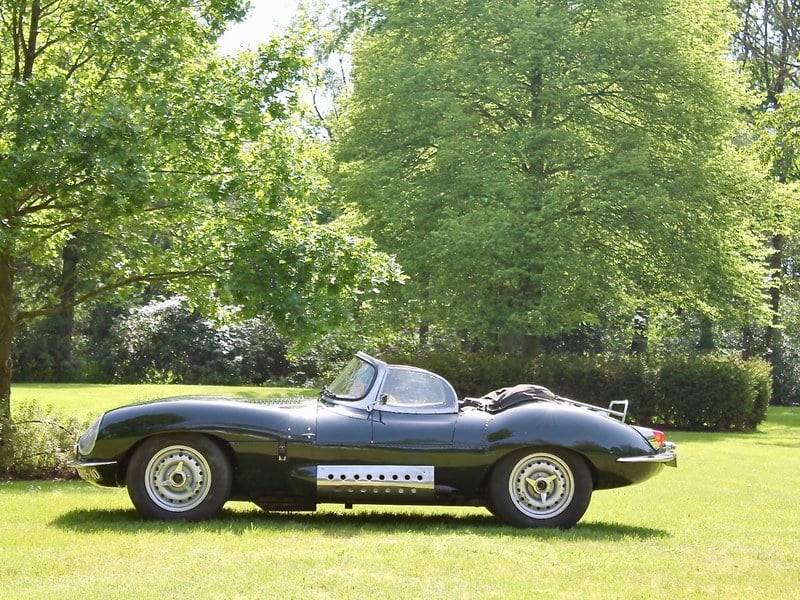
De Jaguar XKSS bezet een onderscheidende plek in de Jaguar-geschiedenis. Het was niet ontworpen als een conventionele wegauto, maar als een pragmatische oplossing voor een kleine voorraad onverkochte D-types nadat Jaguar na het seizoen van 1956 uit de competitie stapte. Door de staartvin te verwijderen en weerbestendige uitrusting toe te voegen zoals een aerodynamisch full-width voorruit, motorkap, zijruiten en zelfs deuren! Jaguar creëerde zo een aansprekende wegversie van zijn meest succesvolle competitieauto. De doelmarkt voor de XK “SuperSport” was de VS, omdat verondersteld werd dat hij mee mocht doen aan SCCA Production Sports Car-racing waar de D-type eerder niet was geaccepteerd.
Achtergrond
De plannen waren om de resterende 25 D-types aan te passen en later een extra serie auto’s te bouwen. Helaas resulteerde de grote brand in de Browns Lane-fabriek in februari 1957 in slechts 16 auto’s die de gevangenis overleefden, terwijl ook de speciale gereedschappen ontwikkeld voor de D-type werden verwoest, waardoor verdere productie op dat moment werd uitgesloten. Hence, de XKSS werd een van de meest begeerde Jaguars aller tijden, beroemd om eigenaar Steve McQueen die zijn auto liefkozend “the Green Rat” noemde; deze auto’s vormen nu de hoeksteen van ’s werelds grootste collecties. Het wordt gemeld dat het McQueen’s favoriete auto was die hij tot zijn dood bewaarde, hoofdzakelijk omdat hij ermee makkelijk de California Highway Patrol kon ontwijken.
De oorspronkelijke 16 auto’s werden uiteindelijk gevolgd door 9 officiële voortzettingsauto’s gebouwd in 2016-17 om de in 1957 verbrande auto’s te vervangen. Deze werden geprijsd boven de £1 miljoen en onmiddellijk bij release verkocht, duidelijk niet genoeg om iedereen tevreden te stellen.
Lang voordat Jaguar Classic de definitieve 9 carrosseries bouwde, was er altijd een gat in de markt. Lynx zag dit en op basis van het herstel- en restauratiewerk aan echte C-type- en D-type-modellen werd het de voornaamste Jaguar-voortzettingsspecialist. Opgericht in 1968 door Guy Black en Roger Ludgate, maakte men een illustere naam voor zichzelf, gaf men een eigen ‘merk’ in de geschiedenisboeken voor het recreëren van hun gereedschapscars, vertrouwd vanwege technische nauwkeurigheid en bouwkwaliteit. Zelfs met werkzaamheden aan Jaguars eigen heritage-vloot.
Chassis Geschiedenis en Competitiegebruik
Deze auto werd in 1979 voltooid bij de Lynx-fabriek in East Sussex als een long-nose D-Type, afgemaakt in Ecurie Ecosse Flag Blue. Zoals bij alle Lynx D-types, is hij gebaseerd op een E-type, wat op zijn beurt de logische evolutie is van het D-type-chassis/ drive train. Aanvankelijk geleverd aan een Schotse eigenaar, keerde hij in 1989 terug naar Lynx voor motorkapreparaties voordat hij naar de Verenigde Staten werd geëxporteerd. Toen gevestigd in Florida, werd hij actief ingezet in competitie in zijn eigen periode, met upgrades zoals een 3, 8-liter motor en grotere remmen. Periodefoto’s en fabrieksschriftuur blijven bij de auto, waarmee deze fase van zijn leven wordt vastgelegd.
Heropbouw naar XKSS-specificatie
Na terugkeer naar het VK in 2020 werd de auto toevertrouwd aan Jerry Booen van D-Type Developments voor restauratie, waar hij werd herbouwd met een nieuw brief om hem opnieuw te bedenken als een XKSS met dezelfde procedure die Jaguar in 1957 volgde. Werkelijks uitgevoerd in Sherwood Green met tan lederen bekleding; deze kleurcombinatie weerspiegelt de Jaguar XKSS voortzettingsauto uit 2016. De onafhankelijke achterwielophanging, geërfd uit het E-Type-platform, maakt de auto aanzienlijk handelbaarder en comfortabeler op de weg dan een oorspronkelijke D-Type-layout, zonder het karakter te verzwakken.
Gebruikersgemak, Context en Eigendom
In tegenstelling tot de £1, 7 miljoen Jaguar XKSS voortzettingsauto’s van 2016-17, biedt deze Lynx zijn eigen gelaagde geschiedenis, van vroege Lynx D-Type-vorm via competitiegebruik in de VS tot zijn huidige keurige XKSS-configuratie. Het is een auto die bedoeld is om gereden en genoten te worden, of het nu op de weg, tijdens tochten of als onderdeel van een collectie is. Voor verdere informatie of om bezichtigingsregelingen te bespreken, kunnen wereldwijde verkoop en verzending geregeld worden. Neem alstublieft contact op met Tom Hardman persoonlijk.