Beskrivning
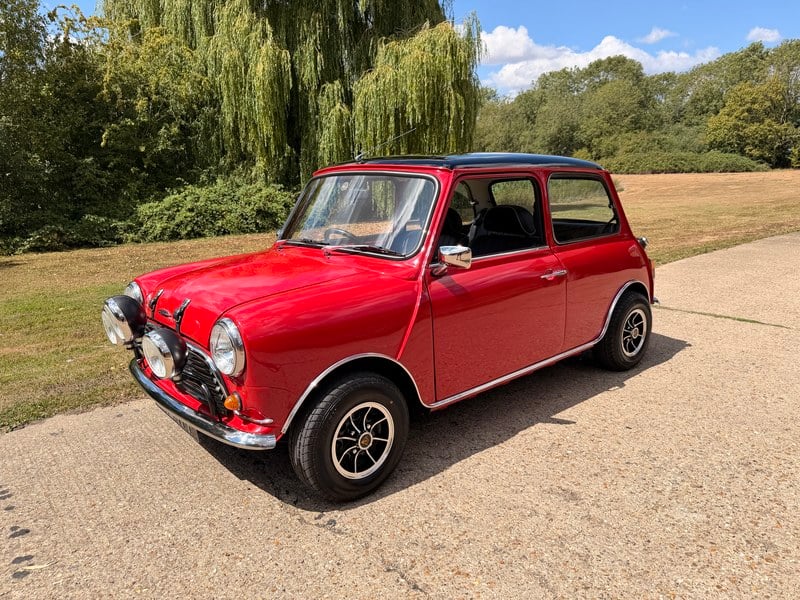
Kelham Hall | Newark, Nottinghamshire Visning: tisdag den 22 september 2026 från kl. 12. 00 Auktion: onsdag den 23 september 2026 kl. 12. 00 Plats: Kelham Hall, Main Street, Newark, Nottinghamshire NG23 5QX Registreringsnummer: Oregistrerad (tidigare P245 WFH) Chassinummer: SAXBMHC97A1100101 MOT: Ingen En av de två sista fabriksförberedda tävlings-Minisna. Utrustad med sexväxlad växellåda, differential med begränsad slirning, ventilerade bromsskivor fram, fyra-*** bromsok, bromsfördelning som kan justeras från instrumentbrädan, instrument för dataloggning och mycket mer! Ursprungligen förberedd för 1996 års 24-timmarsloppet på Nürburgring, där den kom tvåa i sin klass, körd av Michael Hess, Thomas Beyer, Mark Hales och Joachim Weber. Därefter ombyggd av Enterprise och utrustad med en 1 293 cc Swiftune S-motor innan den registrerades för vägtrafik av British Motor Heritage och anmäldes till Monte Carlo-rallyt 1997. Har ingått i Ronald White-samlingen sedan 2009. Medföljer en omfattande historik, som innehåller omfattande information om bilens härkomst. När produktionslinjen i Longbridge slutligen stängdes år 2000 hade mer än 5 000 000 Mini-bilar tillverkats. Alec Issigonis renaste design omdefinierade småbilen; detta mästerverk i utrymmesutnyttjande utnyttjade sin minimala längd – drygt 10 fot – på bästa sätt för att rymma fyra vuxna. Revolutionerande detaljer som växellådan placerad under den tvärställda motorn, de små 10-in. hjulen och den innovativa konstruktionen – där karossens skarvar placerades på utsidan – utnyttjade varje kubikinch av volymen. Även om den ursprungligen föreslagna cylindervolymen på 948 cc hade sänkts till 848 cc före lanseringen, för att inte ställa de dyrare BMC-bilarna i dålig dager, lockade dess strålande köregenskaper snart trimmare, däribland John Cooper, vars upptrimmade Mini väckte uppmärksamhet hos både BMC och Issigonis. Från 1961 erbjöd fabriken Cooper som en serietillverkad modell, och den ännu kraftfullare Cooper S fanns tillgänglig från 1963. Snart kördes Mini inte bara av kungligheter, utan var också praktiskt taget oslagbar i rallytävlingar. År 1964 hade Cooper vuxit till sin slutgiltiga version med 1 275 cc. Mini växte förstås upp. Den bytte namn till Rover 1989 och 1996 fick den bränsleinsprutning, en förarairbag och kylaren flyttades fram till framsidan. Den ikoniska Cooper återkom 1990 och erbjöds återigen som fabriksmodell från september samma år. Köparna hade fullt upp med en omfattande tillvalslista för att kunna anpassa sina bilar efter eget tycke. När entusiaster talar om Works Mini Cooper tänker de vanligtvis på ”33 EJB” och dess systerbilar, som tillsammans uppnådde tre officiella totalsegrar i Monte Carlo-rallyt mellan 1964 och 1967, för att inte tala om modellens många totalsegrar i de brittiska, europeiska och finska rallymästerskapen, samt de brittiska, europeiska och australiska mästerskapen för sedan- och touringbilar under 1960-talet. Works engagemang i Mini-racing upphörde inte med de ursprungliga Coopers nedläggning. Det återupptogs när Cooper gjorde sin gloriosa comeback på 1990-talet. Även om de inte kunde upprepa Minis tidigare framgångar var de nya tävlingsbilarna värdiga efterföljare till sina föregångare från 1960-talet, och ”P245 WFH” representerar en ytterst betydelsefull utveckling i Minis historia, eftersom den är en av de två sista tävlings-Minis som utvecklades av Works (möjligen den allra sista). De kostade Rover cirka 36 750 pund plus moms per styck att förbereda och var förmodligen också de dyraste. Vår bil förbereddes ursprungligen av Enterprise Racing i Oldbury med en motor från Bill Richards Racing, på uppdrag av Rovers avdelning British Motor Heritage, som var den första registrerade ägaren. I sin mandelgröna lackering, den historiska tävlingsfärgsättningen från Cooper Car Company, skickades den till ADAC:s 24-timmarslopp på Nürburgring, där den slutade på 89:e plats totalt och en imponerande andraplats i klassen, med Michael Hess, Thomas Beyer, Mark Hales och Joachim Weber bakom ratten. Det gick ännu bättre i ADAC:s 6-timmarslopp på Nürburgring 1996, då Weber, Hess och Beyer körde hem segern i grupp A:s 1 400 cc-klass. I slutet av november 1996 genomgick de två bilarna en totalrenovering och förbereddes för rally, vilket gav dem ett nytt utseende i den traditionella röda färgen från de gamla BMC-rallybilarna. Medan systerbilen byggdes enligt Grupp N-specifikationerna skulle vår bil tävla i Grupp A. Enterprise stod återigen för huvuddelen av arbetet, även om den 1 293 cc stora S-specifikationsmotorn med dubbelpunktsinsprutning specialförbereddes av Swiftune. Övriga specifikationer inkluderade en nästan unik Tran-X-sexväxlad växellåda, en differential med begränsad slirning, slutväxel 3, 9:1, ventilerade bromsskivor fram med fyrkolvsok, ribbade bromstrummor bak, en hydraulisk handbroms, bromsfördelningsreglage som kunde justeras från instrumentbrädan, en fjädring med fullt rörliga leder samt justerbara krängningshämmare fram och bak, och en lättviktig Max Mosan-kabelhärva. Karossen hade gjorts lättare och förstärkts och försetts med en insvetsad Tarcal-rullbur tillverkad av T45-stålrör, som omfattade de bakre dämpartornarna och det främre skottet, och även de främre och bakre hjälpramarna hade modifierats och förstärkts. Interiören är...