
Descrição
Descrição
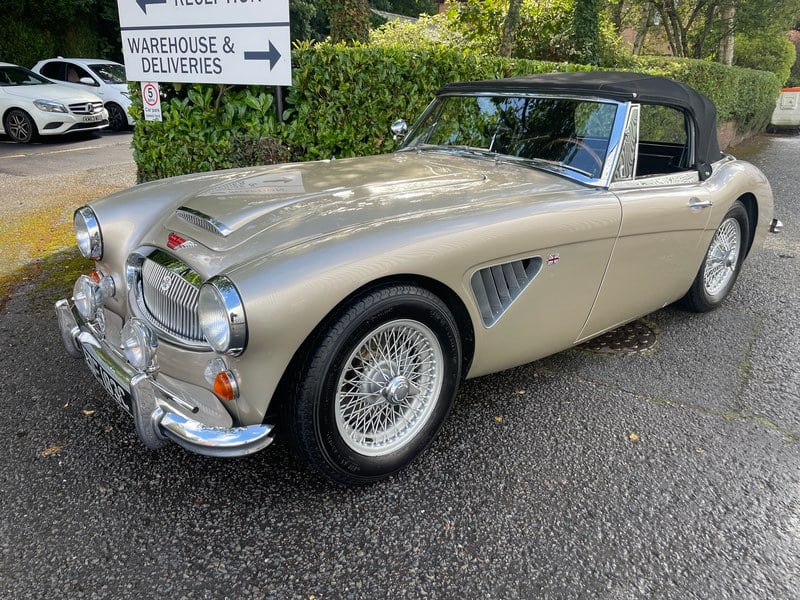
• «DRX 258C», um «Big Healey» de última geração, construído pela fábrica, com cabeça de cilindro em liga leve, carburadores Weber triplos, escape «montado na parte superior» e travões de disco nas quatro rodas
• Um dos 28 automóveis de fábrica, um dos últimos três fabricados, com histórico ininterrupto desde novo
• Conduzido pelos pilotos privados do Big Healey, Don e Erle Morley, nos ralis de Genebra, dos Alpes franceses e da RAC de 1965
• Testado pela revista Autocar a 3 de setembro de 1965, tendo sido descrito como «uma experiência inesquecível»
• Matriculado no Reino Unido e oferecido após 20 anos numa importante coleção privada
ESTE AUTOMÓVEL
Stuart Turner substituiu Marcus Chambers como diretor de equipa do Departamento de Competições da BMC em outubro de 1961. Chegou numa altura em que o Mini-Cooper começava a vencer provas e o Big Healey se aproximava da maturidade. Para 1965, sabendo que seria o último ano do carro em competição, Turner autorizou a preparação de três novos carros de rali Healey 3000: DRX 257C, DRX 258C e EJB 806C.
Todos eram, na verdade, réplicas das máquinas de 1964 e estavam equipados com pára-choques dianteiros e traseiros. Este carro, com o chassis H-BJ8-31337, foi preparado na primavera de 1965 para os Morleys utilizarem no Rali de Genebra, de 10 a 12 de junho. Com o número de competição 1, terminaram em primeiro lugar na sua classe e em terceiro na categoria GT, que foi vencida por Jean Rolland num Alfa Romeo TZ.
A prova seguinte foi o Rali Alpino Francês, de 19 a 25 de julho, o famoso Coupe des Alpes. A BMC inscreveu o Healey DRX 258C (com o número 137) para Don e Erle Morley, a par de quatro Mini-Coopers de 1 275 cc. Morley era bicampeão desta prova de ritmo acelerado e o carro adaptava-se bem às longas subidas a potência máxima ao longo de mais de 2 500 milhas de rali em estrada. A concorrência vinha dos Minis, de Bernard Consten num Alfa Romeo TZ, de dois Porsche 904 apoiados pela marca e de Peter Harper num Sunbeam Tiger de fábrica. Graças à experiência de Morley e à potência e fiabilidade do DRX 258C, o carro venceu a classe GT de mais de 2, 5 litros, terminando em segundo lugar na classificação geral da GT depois de Harper, vencedor da classe, ter sido desclassificado. O palmarés dos Morley nos «Big Healeys» no Rali dos Alpes passava agora a ser o seguinte: duas vitórias gerais consecutivas, um segundo lugar geral em 1964 e uma vitória de classe em 1965. Era a prova preferida de Don Morley.
Assim que o carro regressou a Inglaterra, foi emprestado à Autocar para uma «semana de pura alegria, sem misturas» num teste de estrada com a revista automóvel mais importante da Grã-Bretanha. Os testadores registaram um tempo de 0 a 60 mph de 8, 2 segundos, atingindo os 100 mph em 23, 5 segundos. Um carro de série atingiria esses valores em 35, 3 segundos. Com uma relação de transmissão final curta de 4, 3:1, a velocidade máxima do carro de rali era de 120 mph. O teste foi publicado na edição de 3 de setembro.
Seguiu-se então o regresso a Abingdon para uma preparação meticulosa para o RAC Rally, a decorrer de 21 a 25 de novembro. Num relatório pós-evento, a Autocar descreve o mestre fabricante «Nobby» Hall a fabricar o silenciador de escape de nível elevado que saía logo abaixo da porta do copiloto, mais baixa, em ambas as viaturas inscritas: o DRX 258C e um carro novo, o EJB 806C, para Timo Mäkinen. O rali decorreu em estradas públicas e trilhos florestais não pavimentados. A distância ao solo era fundamental, pelo que os mecânicos soldaram uma grande proteção de cárter em aço ao chassis. Nesse ano, não eram permitidos pneus com pregos nem notas de percurso. O rali totalizou 2 500 milhas, 500 das quais em etapas especiais cronometradas. Consequentemente, esperava-se que os pilotos escandinavos se destacassem.
Vestido com um casaco de pele de carneiro, o Campeão do Mundo de F1 de 1962, Graham Hill, deu a partida aos concorrentes às 14h00 de domingo, a partir do Forte Hotel London Airport. O percurso serpenteava de Londres até ao West Country, seguindo depois para norte, com uma paragem no domingo à noite em Bristol. O Healey dos Morley, com o número 14, liderou a coluna de carros à saída do Aeroporto de Bristol na segunda-feira de manhã, rumo às florestas galesas e ao circuito de Oulton Park. Nessa altura, caía neve, o que tornou ainda mais difícil a tarefa de Erle Morley de empurrar o DRX 258C para o paddock, para as reparações na segunda-feira à noite de um eixo partido. Um novo eixo foi instalado em 25 minutos. No dia seguinte, a caravana do rali atravessou a Floresta de Kielder e entrou na Escócia, com neve que, em alguns locais, atingia os 9 polegadas de profundidade. Foram as condições traiçoeiras na Escócia que apanharam Don Morley de surpresa. Os gémeos saíram da estrada na etapa florestal de Loch Achray, tendo o carro capotado numa valeta, com danos menores na carroçaria. Sem espectadores presentes para dar uma mão ao Erle a retirá-lo, isso marcou o fim do seu rali. Mäkinen acabou por terminar em segundo lugar, a apenas três minutos de Rauno Aaltonen, num Mini-Cooper S de fábrica. Foi um final honroso para uma carreira brilhante do «Big Healey».
Tal como os outros Healeys de fábrica, o carro foi vendido no final da época. A navegadora de Pat Moss, Pauline Mayman, proprietária de uma empresa de acessórios para corridas e ralis em Birmingham, comprou-o. Mayman não era apenas uma copiloto excecional — substituiu Ann Wisdom no lugar ao lado de Pat Moss —, mas também uma piloto de ralis da equipa oficial da BMC Mini-Cooper, que venceu a Coupe Dames no Rali dos Alpes durante três anos consecutivos, além de ser uma piloto de corridas consumada. Mayman conduziu o carro, ainda com as marcas do RAC Rally, de Abingdon de volta a Birmingham.
Pauline Mayman, o marido Lionel e o filho Christopher competiram com ele (juntamente com o antigo Big Healey de fábrica BMO 93B) com sucesso em provas de clube ao longo dos dois anos seguintes. Para transferir melhor a potência do seu potente motor para a estrada, Lionel Mayman instalou um eixo traseiro Jaguar com diferencial de deslizamento limitado.
Um anúncio publicado por Lionel Mayman na edição de 31 de março de 1967 da revista «Autosport» dizia o seguinte:
ACABARAM-SE AS REGATAS
Tenho de vender os meus dois fabulosos Healey 3000 de fábrica.
1965 DRX 258C, o modelo mais aperfeiçoado de sempre e o último da série.
1964 BMO 93B, agora totalmente reconstruído num novo chassis (custo superior a 1 000 libras) após o acidente em Rufforth.
O DRX participou apenas em seis provas desde a reconstrução completa e não compete desde que Ron Timmins voltou a dar vida ao motor.
O BMO, vencedor de Liège, é agora um carro novo e ainda não foi testado.
Ambos os carros são perfeitamente capazes de dar uma volta no circuito do Silverstone Club em menos de 1 minuto e 10 segundos.
Nenhum dos carros encontrou compradores, uma vez que um Healey 3000 foi conduzido até à aposentação em Silverstone, a 18 de agosto de 1967, por Christopher Mayman. Outro anúncio publicado a 23 de fevereiro de 1968 colocava ambos os carros à venda.
Robbie Gordon comprou o «DRX», recordando: «O Lionel levou-me para uma volta de demonstração e conduziu-o à volta do Bull Ring [centro comercial] de Birmingham como um louco.» O carro ainda se encontrava em configuração de rali, com a tampa da bagageira equipada para duas rodas sobressalentes. Foi utilizado com entusiasmo ao longo de 1968, incluindo uma corrida pontual pelo lendário especialista em carros de turismo Gerry Marshall em Snetterton, numa tentativa de vencer o piloto ocasional da equipa de fábrica John Gott num carro semelhante. Nessa ocasião, as habilidades do grande piloto não foram suficientes.
Gordon publicou um anúncio na edição de 1 de novembro de 1968 da revista * Autosport*, descrevendo o «DRX» como «com especificações completas de competição da equipa de fábrica, mas homologado para uso em estrada e absolutamente impressionante como carro de estrada». Preço: 1 625 libras, aproximadamente o mesmo que um 250 SWB ou um DB4 GT usado.
Ron Collings comprou-o e apareceu várias vezes nas reportagens sobre corridas de clubes da revista * Autosport* em 1968 e 1969. Era frequentemente descrito como o «Healey 3000 de 1965 ex-Works de Robbie Gordon». A posse do carro por parte de Collings prolongou-se até março de 1970 (3.º lugar em Snetterton). Nessa altura, o Healey rodava com jantes de raios Borrani Ferrari de 12 polegadas, que mal cabiam nos arcos das rodas alargados. Collings era proprietário de outro Healey importante, o DAC 953C, e, em 1974, vendeu ambos ao oficial da Força Aérea dos EUA Steve States, que competiu com o primeiro, mas manteve o «DRX» praticamente intacto nas instalações de Gordon enquanto prestava serviço na Europa. Cinco anos mais tarde, Gordon vendeu o «DRX» de States a Christopher Mayman e Keith Barber.
No início da década de 1980, os Big Healeys genuínos ex-Works, como o «DRX», eram carros de coleção valiosos; Steve States recorda que o valor do carro tinha quintuplicado enquanto esteve na sua posse. Por isso, Mayman e Barber utilizavam o carro principalmente em eventos da Austin-Healey — era simplesmente demasiado valioso para competir.
Em 1983, passou para as mãos de um dos maiores colecionadores do mundo, Sir Anthony Bamford. Por volta dessa altura, Jonathan Everard, o fundador da JME Healeys, recebeu a missão de restaurar o carro para o estado em que competiu em 1965. Everard fez o seu estágio na Donald Healey Motor Company, em Warwick, no início dos anos 60. O seu pai também trabalhava lá. O trabalho foi concluído em 1985 (conforme confirmado numa carta datada de 1 de junho de 2006) de acordo com as especificações completas do Rali dos Alpes de 1965, com ênfase na estética, uma vez que o carro se destinava a ser exposto num museu.
Foi colocado à venda no leilão da Coys NEC em abril de 1989, tendo sido descrito como «totalmente reconstruído de acordo com os padrões de concurso por Jonathan Everard» para o vendedor Mike Hayward (entregue por um jovem Simon Kidston). O carro foi vendido por 230 000 libras, o que na altura constituiu um preço recorde. Um outro proprietário foi o colecionador de Jaguars Alan Lloyd, antes de passar para o conhecido entusiasta Anthony Trevelyan em 2004, que mandou reconstruir a parte mecânica do carro por Jonathan Everard. Dois anos mais tarde, o carro voltou a estar à venda. Para o promover, em maio de 2006, o Healey foi o carro de capa de uma das primeiras edições da revista «Octane». O famoso DRX 258C tinha-se reunido com Don Morley, agora reformado e a viver na sua quinta em Suffolk. A reportagem menciona trabalhos de restauração adicionais realizados pela JME para o colocar em condições de funcionamento ideais, tendo o autor confessado a Morley, após uma hora no habitáculo num dia muito chuvoso: «Meu Deus, foi fabuloso, que carro maravilhoso.» O nosso cliente comprou-o pouco tempo depois e, desde então, tem permanecido no seu museu.
Numa inspeção realizada pelo especialista em Healey, Jack Rawles, em dezembro de 2025, o perito confirmou que o carro se encontrava «num estado consistente com o que eu esperaria ver num carro de rali “Works”. A apresentação geral, o equipamento e as especificações estão em estreita consonância com os carros preparados pela equipa de fábrica da época… [embora] não se encontrem exatamente nas especificações originais.»
Várias características, tais como o reforço do chassis conforme as especificações de fábrica, os amortecedores traseiros corretos, as molas de lâmina traseiras reforçadas exclusivas dos Healey de fábrica e os pontos de elevação rápida, comprovam a autenticidade do carro. Os faróis de estrada e de nevoeiro dianteiros originais de 5¾in são referidos como «raramente vistos fora dos carros de fábrica, uma vez que eram todos feitos à mão». Algumas adaptações à condução moderna, incluindo um depósito de combustível moderno, um sistema de escape de modelo mais recente, um radiador de alumínio e amortecedores dianteiros do tipo MGB, podem ser facilmente revertidas. Foram observados alguns danos históricos resultantes de um acidente no longarão esquerdo do chassis.
Rawles conclui que «esta é uma peça agradável e muito interessante da história da BMC». Foi emitido um Certificado de Património pelo British Motor Industry Heritage Trust a 6 de janeiro de 2026, indicando: «O registo de fábrica confirma que o H-BJ8/ 31337 é um carro de competição da Works.» O carro continua matriculado no Reino Unido com a matrícula original, DRX 258C.
Sendo um dos últimos Big Healeys de fábrica, este carro é uma peça significativa da história do desporto motorizado. Foi conduzido por aqueles que são possivelmente os melhores expoentes do modelo, os gémeos Morley, uns agricultores modestos e elegantes de Suffolk.
Apesar de ter passado a maior parte das últimas duas décadas em exposição estática, funciona bem — embora beneficiasse de uma remessa em funcionamento — e oferece a oportunidade de recriar aqueles longos ralis europeus em eventos modernos, competindo no Goodwood Revival ou no Le Mans Classic num autêntico carro GT ex-Works.