
Beschreibung
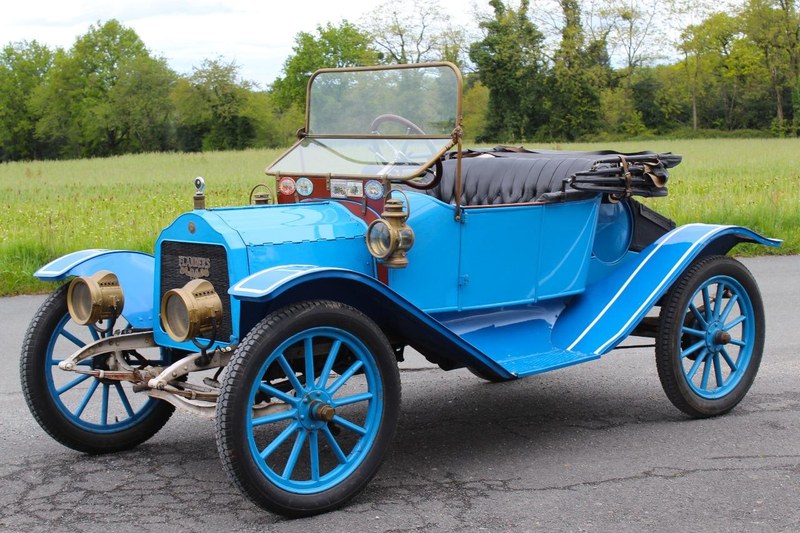
Karosserie Runabout
Französische Zulassungsbescheinigung
Vierzylindermotor, 20 PS und 3 Liter Hubraum
Gepflegter Gebrauchszustand
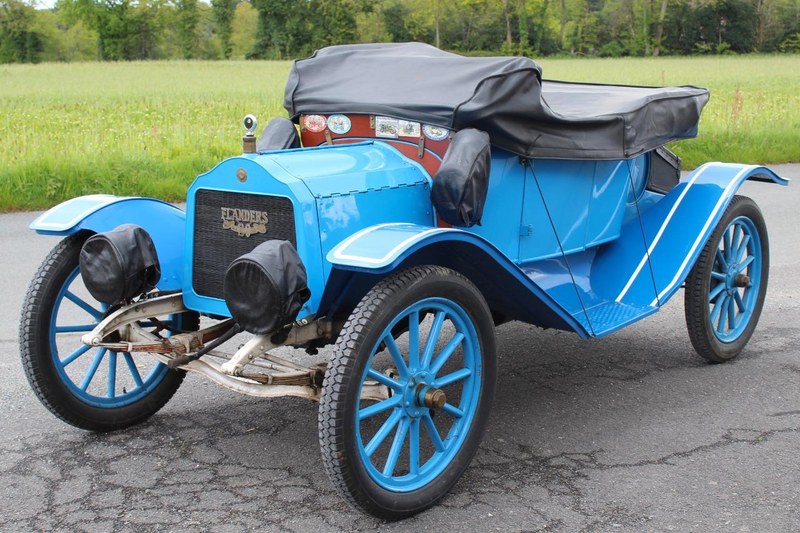
Scheinwerferabdeckungen und Innenausstattung für den Transport des Autos auf dem Anhänger
In gleichem Besitz seit mehr als 15 Jahren
Wäre das einzige Fahrzeug der Marke, das in Europa identifiziert wurde
Seltenere und läuft stärker als eine Ford Model T
- details above
Dieses Modell ist wichtig, nicht wegen seiner Rennsiege, sondern wegen seiner Rolle bei der Demokratisierung des Automobils in Amerika, als direkter Konkurrent der berühmten Ford Model T.
Die Flanders Twenty (oder Flanders 20): Der Gegenschlag gegen die Model T
Die Flanders Twenty ist vor allem das Produkt der Karriere eines der Pioniere der Automobilherstellung: Walter E. Flanders.
Historischer Kontext und Entstehung
Walter E. Flanders: Eine Schlüsselfigur, der zuvor Produktionschef bei Henry Ford war und eine zentrale Rolle bei der Einführung der Massenfertigung spielte (die zur Fließbandproduktion der Ford Model T führte).
Die E-M-F-Gesellschaft: 1908 gründete Flanders mit die Everitt-Metzger-Flanders Company (E-M-F). Die Gesellschaft produzierte zunächst das Modell E-M-F 30, doch verließ Walter Flanders das Unternehmen und kehrte 1910 zurück, um die Flanders Automobile Company zu gründen, mit dem ausdrücklichen Ziel, mit dem gigantischen Erfolg der Ford Model T zu rivalisieren.
Ziel: Ein zuverlässiges, einfaches Auto zu verkaufen und vor allem erschwinglich.
Beliebtheit und Merkmale
Die Flanders Twenty wurde zu einem sehr wettbewerbsfähigen Preis eingeführt (ursprünglich etwa 750 $, oft niedriger als der Preis der Ford T bei deren Einführung).
Produktionszeitraum 1910–1912/ 1913
Typische Karosserie Runabout (Doppelsitziges Cabriolet)
Vierzylindermotor
Steuerleistung/ Verbaut etwa 20 PS (daher der Name „Twenty“).
Hubraum ca. 3 Liter.
Im 1911 war die E-M-F (einschließlich der Flanders Twenty) die zweitgrößte Marke nach Produktionsvolumen in den USA, hinter Ford. Insgesamt wurden in ihrer kurzen Existenz etwa 31. 500 Einheiten produziert.
Obwohl sie beliebt war, gelang es ihr nicht, den Preis unter dem der Ford T zu halten, da Henry Ford die Preise seiner Model T regelmäßig senkte.
Die Flanders Automobile Company wurde sehr schnell eng mit Studebaker verbunden. Studebaker, der Gigant der Herstellung von Pferdewagen, war der einzige Vertriebspartner der E-M-F- und Flanders-Fahrzeuge. Studebaker wird schließlich beide Gesellschaften im Jahr 1912 vollständig übernehmen und die Flanders 20 bis 1913 als Studebaker 20 vermarkten, bevor man seinen eigenen Namen für alle Modelle verwendet.
Die Flanders Twenty repräsentiert einen entscheidenden Meilenstein der Automobilgeschichte, der den Übergang vom Luxuswagen zu Serienfahrzeugen markiert.

