Description
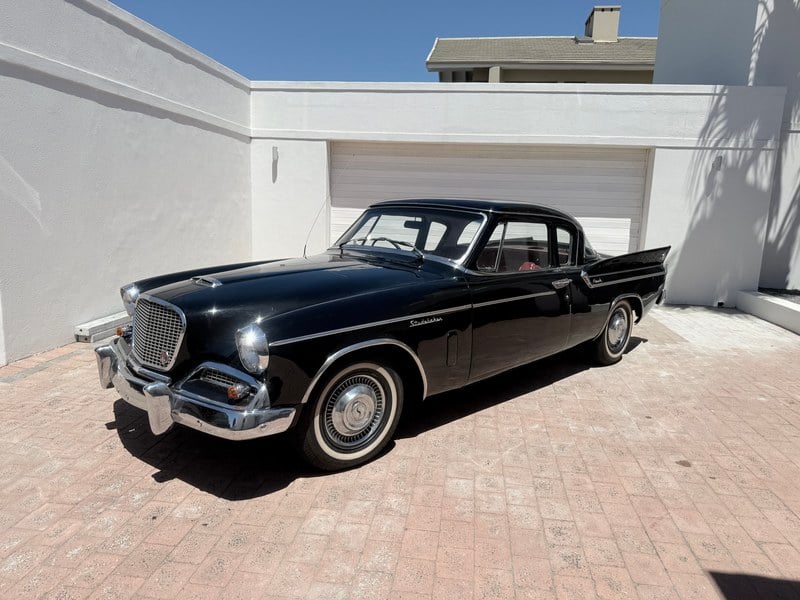
At the crossroads of the 1950s and 1960s, as luxury coupes enjoy a growing appeal in the United States, Studebaker – one of the oldest American carmakers, founded in 1852 as a wagon manufacturer – tries to make its mark against the Detroit giants. The Hawk range, launched in 1956, marks the brand’s bold response to the Ford Thunderbird and the Pontiac Grand Prix: a line of powerful coupes with a distinct style, designed for a audience seeking performance and prestige.
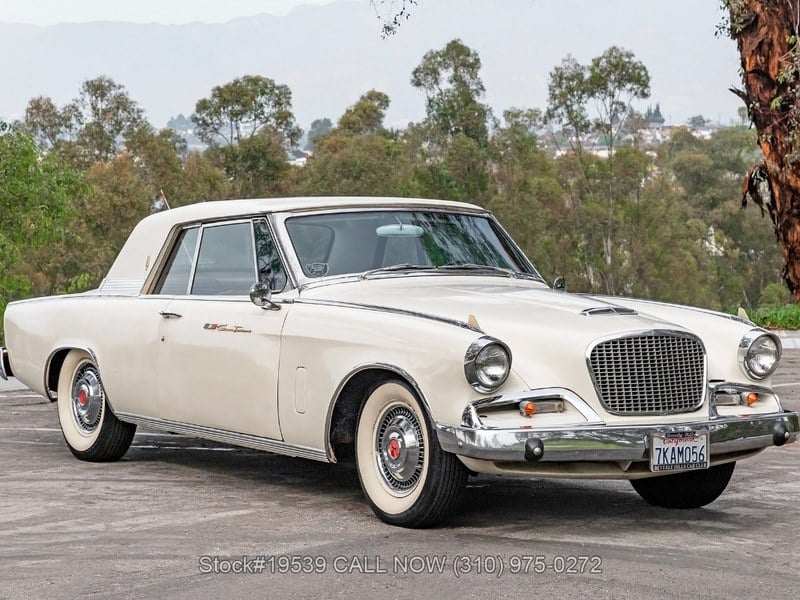
But faced with fierce competition and growing internal difficulties, Studebaker must adapt its strategy. It is in this context that, in 1962, the Gran Turismo Hawk appears, the ultimate evolution of the line. Designed by the renowned industrial designer Brooks Stevens, the GT Hawk succeeds in transforming an already age‑old chassis by giving it a modern, almost European look, while preserving the distinctive character of its American roots. Its sloping roofline, angular front end, pared‑back surface treatment and restrained use of chrome contrast with the era’s stylistic exuberance.
Produced only between 1962 and 1964, the GT Hawk symbolises, in a way, Studebaker’s “swan song” before the closure of its South Bend plant in 1963, followed by the definitive abandonment of automobile production in 1966. With fewer than 5, 000 units produced for the 1963 year, the Gran Turismo Hawk is today a rare model, prized by collectors for its unique silhouette, refined interior and its V8 engine with a smooth temperament.
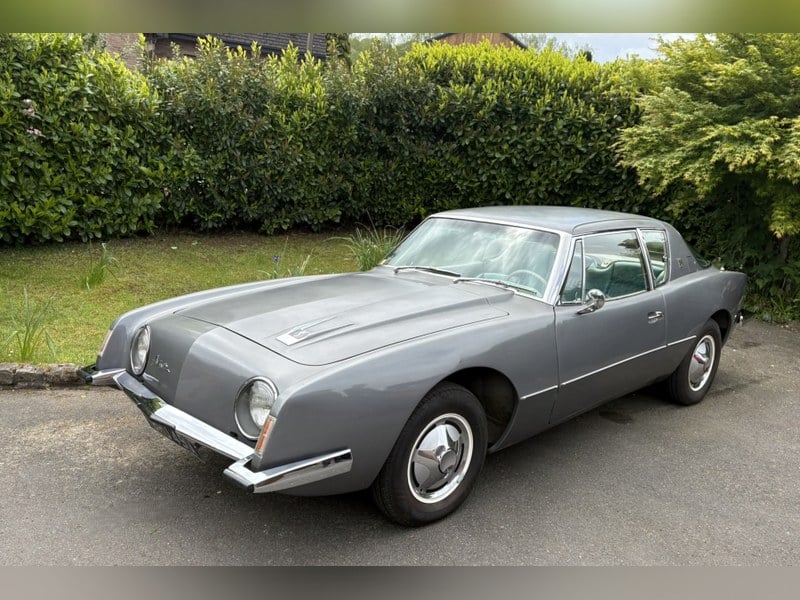
The example offered for sale is a 1963 Studebaker Hawk Gran Turismo, fitted with a 4. 7‑litre (289 CI) V8 engine with a double‑barrel carburettor, mated to an automatic transmission. It was originally delivered in California, in El Cerrito, subsequently imported to the Netherlands, and then registered in Belgium. It shows a certified mileage of 70, 659 miles, certified by various official documents.
The bodywork has been completely repainted in an elegant two‑tone metallic finish, applied using a multi‑layer technique, and the original chrome trim has been carefully preserved. The package is completed by tinted glass, well‑fitting body panels, and Bosch H4 headlamps. The engine bay is clean and well maintained, with mechanical components (belts, hoses, wiring) in good condition.
The interior, largely original, features red leather upholstery in good condition, complemented by vinyl and cloth door panels, a vinyl headlining, and a dashboard combining plastic and metal, with a two‑spoke steering wheel typical of the era. All instruments are functional, as is the period radio. A new carpet has recently been installed, contributing to an interior that is partially renovated but faithful to the model’s spirit. Its careful presentation, working mechanics and comprehensive provenance make it a rare opportunity for 1960s American car enthusiasts. At once powerful and elegant, distinctive without being ostentatious, this Hawk testifies to a pivotal moment in automotive history and, with verve, embodies the end of an era for Studebaker.