Beschreibung
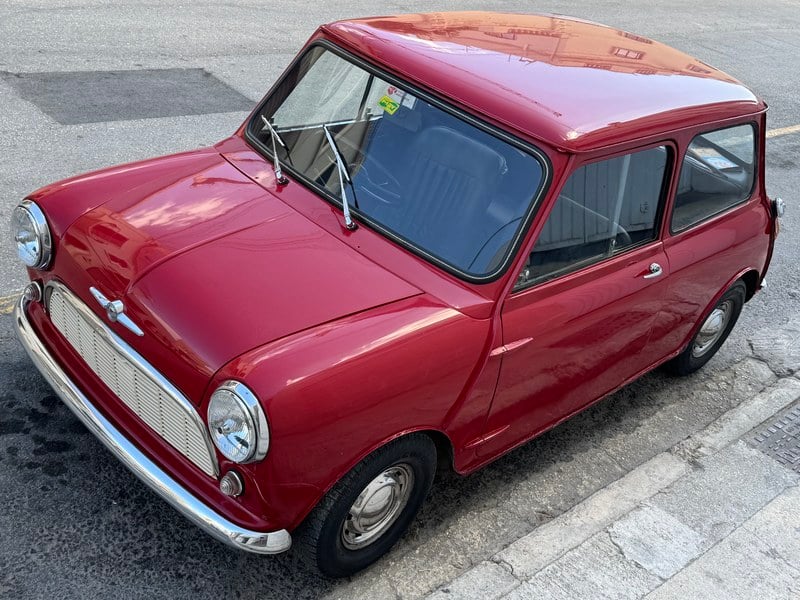
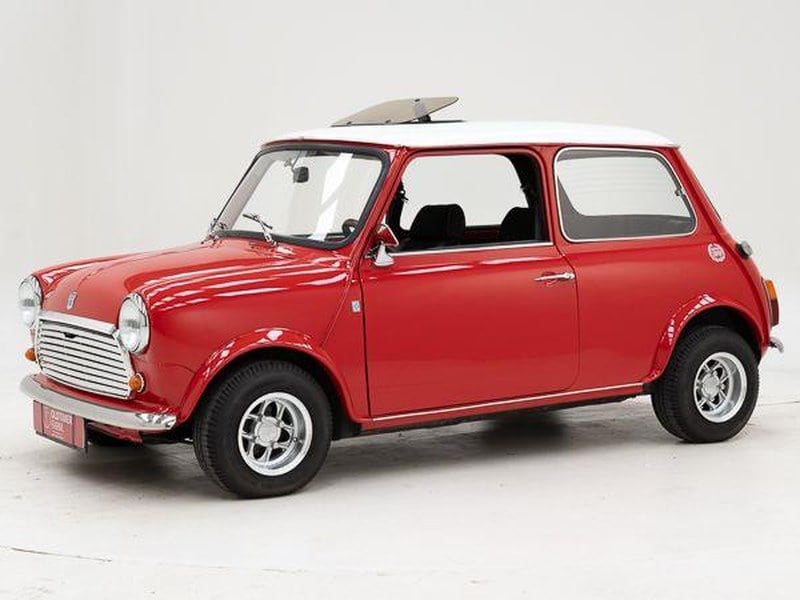
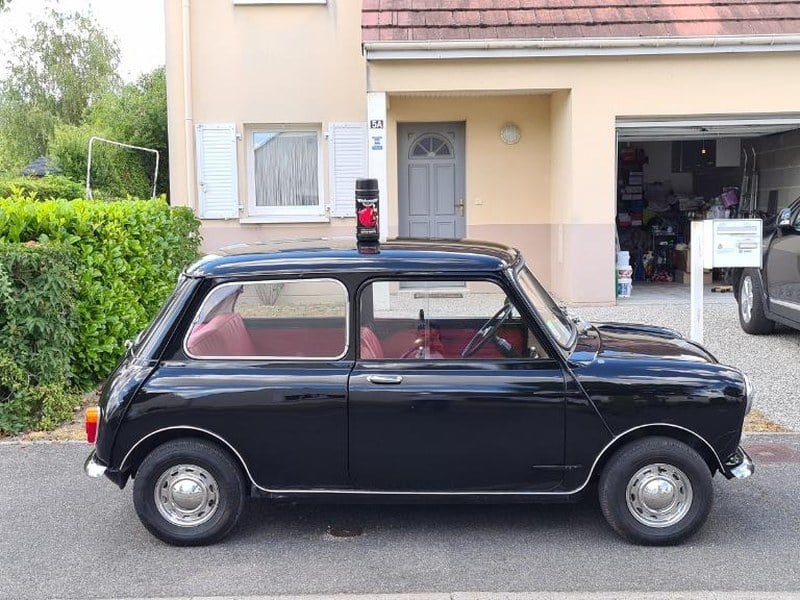
Vollständig zerlegt und 2020 sorgfältig restauriert.
Bereit zum Fahren in ihrer Flame-Red-Lackierung (neu lackiert).
Der Mini, ein kleines Auto mit großer Geschichte.
Im Jahr 1959 brachte der britische Automobilhersteller British Motor Corporation (BMC) den Austin Mini auf den Markt, mit dem klaren Ziel, ein kleines Stadtauto mit süßem Design zu bieten.
Dank der Beatles und seiner Präsenz in vielen bekannten Filmen erlangte das Auto im Laufe der Jahrzehnte einen ikonischen Status.
Es war Alec Issigonis, ein britischer Autokonstrukteur griechischer Herkunft, der für BMC arbeitete und die Mini entwarf.
Sein Ziel war es, ein erschwingliches und sparsames Auto zu schaffen, das effizient ist und sich in den engen Straßen britischer Städte leicht fahren lässt.
Diese Herangehensweise, verbunden mit einem süßen Design, rief echtes Aufsehen bei den Jugendlichen hervor.
Der Mini wurde auch bei einflussreichen Persönlichkeiten äußerst beliebt, so sehr, dass alle Beatles – John Lennon, Paul McCartney, George Harrison und Ringo Starr – stolz ihre Minis zeigten.
1969 spielte der Wagen die Hauptrolle in dem Film The Italian Job, in dem Bankräuber eine Mini als Fluchtfahrzeug benutzen.
Das Auto von Mr. Bean ist ebenfalls ein Zitronengrüner Mini aus dem Jahr 1977, der seine Tollpatschigkeit unterstreicht.
Ursprünglich wurde der Mini in verschiedenen Ausführungen gebaut, wie Limousine, Kombi, Lieferwagen und sogar als Pickup.
Diese Ausführungen fanden beim Publikum nie wirklich Anklang.
In den 1980er-Jahren begann der Mini an Beliebtheit zu verlieren – aufgrund des harten Wettbewerbs mit anderen Automarken.
Dies löste 1986 eine schwere Finanzkrise bei British Leyland aus – dem ehemaligen BMC, das auch Jaguar, Rover, Triumph und MG besaß.
Sie beschlossen sogar, das Unternehmen umzustrukturieren und zu privatisieren; so entstand die Rover Group.
1994 verkaufte die Rover Group die Mini an BMW, die sieben Jahre später, 2001, eine verfeinerte Version der Mini auf den Markt brachte.
Heute produziert BMW die Mini weiterhin (in größtmöglicher Wahrung der britischen Identität) und sie ist in verschiedenen Ausführungen erhältlich: Cabrio-Version, rein elektrische Mini, Hybrid-Mini, sportliche Version und sogar eine Kombi.
Wie bereits erwähnt war das Ziel, ein kleines Auto zu bauen, das in Städten unterwegs sein kann; daher musste so wenig Platz wie möglich genutzt werden, was Mitte des 20. Jahrhunderts eine echte Herausforderung war.
Die 1950er Jahre gelten oft als Wendepunkt in der Automobiltechnologie, und der Mini hat zu diesem Wandel beigetragen: ein Frontantrieb mit transversal eingebautem Motor, kompakt, der für den Stadtverkehr geeignet ist.
Heute ist der Mini ein begehrtes Klassikerauto, nicht nur bei Oldtimer-Enthusiasten.
Das süße, charmante Design erobert die Herzen aller.
Technische Daten:
Karosserie
Länge (cm): 305
Breite (cm): 141
Höhe (cm): 135
Radstand (cm): 204
Gewicht (kg): 640
Technik
Motor: 848 ccm Vierzylinder-Reihenmotor quer eingebaut
Ventile: 8
Kraftstoffzufuhr: 1 SU-Vergaser
Getriebe: 4-Gang-Handschaltung
Antrieb: Frontantrieb
Lenkung: Links
Max. Leistung: 34 PS (25 kW) bei 5500 U/ min
Max Drehmoment: 60 Nm bei 5500 U/ min
Höchstgeschwindigkeit: 116 km/ h
Referenz ch729B
Marke Mini
Modell 850 '75
Typ Limousine
Baujahr 1975
KM 200
Hubraum 848
Getriebe manuell
Lenkung links
Fahrgestellnummer XK2S1108729B
Preis 15. 950 €