Description
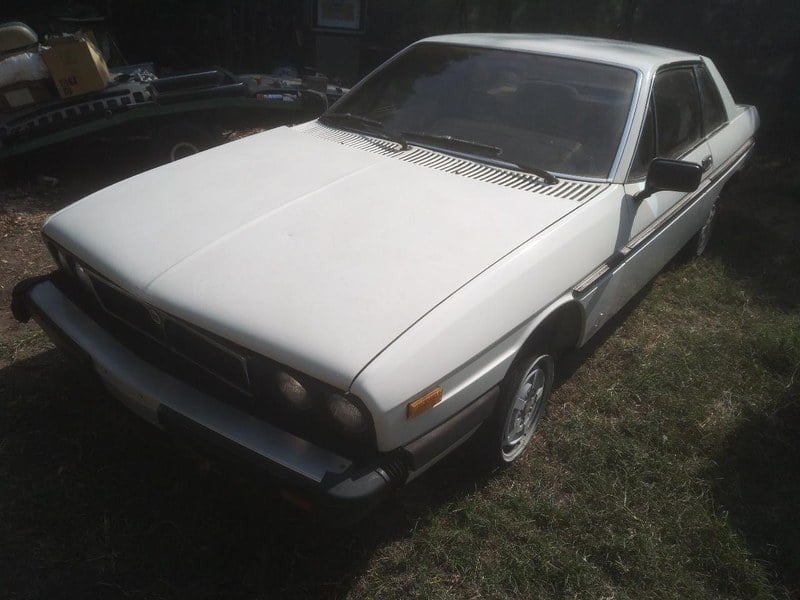
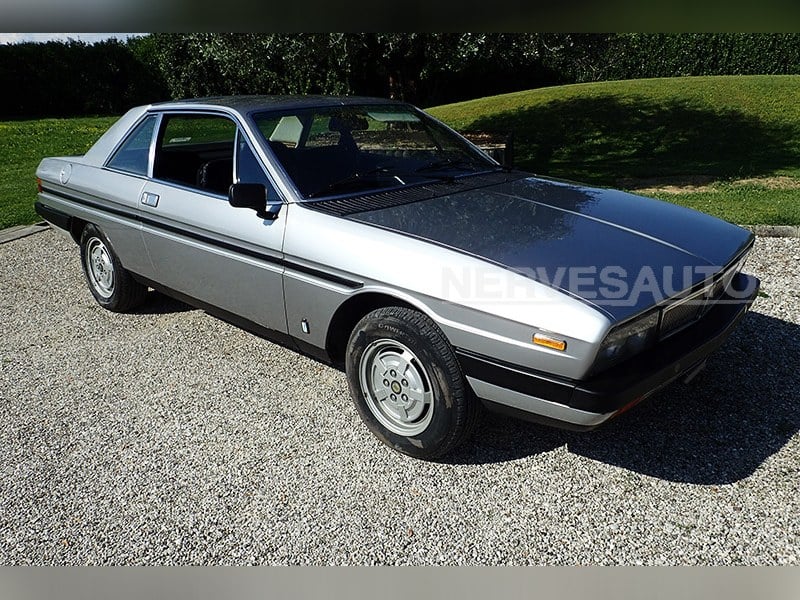
A truly exceptional car is now up for sale: it is undoubtedly the last surviving example of an experimental prototype of the Lancia Gamma Coupé (Pininfarina bodywork) intended for the US market. Only three or four examples were probably ever built, as the Lancia Gamma was never marketed in the United States. This example has been preserved in absolutely original condition, having never been restored; it was used by the experimental department at the former Lancia factory in Borgo San Paolo, Turin, in the late 1970s. A Pininfarina document was even found inside the car, detailing the vehicle’s specifications as it was built at the Grugliasco factory, situated just over a kilometre from the former Lancia factory where the Gamma was produced. This document, entitled ‘Tabella Impostazione Scocca’ (Body Structure Specification Sheet), reveals that this coupé was built to test a version intended for the North American market for the 1980 model year. Based on a Gamma Coupé 2500 cm³ with first-series carburettors (chassis no. 830AC0* 003192, body number 696 – 999022) in white (with blue velvet seats, grey carpet and air conditioning), all the specific features required by the US regulations in force at the time were added: energy-absorbing bumpers, side marker lights, twin round ‘sealed-beam’ headlights and a number plate light borrowed from the Fiat 124 Spider. Furthermore, other differences include the fuel filler flap, which has no lock (unlike the standard Gamma Coupé models), bronze-tinted heat-insulating windows with a radio antenna integrated into the windscreen, the ventilation grille at the base of the windscreen painted in the body colour (white) — rather than matt black as on all production vehicles — and, finally, the front grille of the ‘second series’ Gamma Coupé, which appeared in 1980. Pininfarina’s production document states that construction of the bodywork began on 24 October 1978 and that the vehicle was sent to Lancia’s test department on 19 April 1979. By that time, Lancia’s management had probably already abandoned plans to launch the Gamma on the American market; the test engineers therefore decided to use the complete body shell supplied by Pininfarina (which produced all the body shells for the Gamma Coupé, subsequently shipped to the Lancia factory in Turin for the assembly of the mechanical components) to test the new 2, 500 cm³ electronically fuel-injected engine developing 140 ch. This was the latest version of the refined Gamma flat-four engine (the last engine entirely designed and manufactured by Lancia), intended to power the ‘second series’ Gamma models — saloon and coupé — from spring 1980 onwards. During the second half of 1979, among the Lancia prototypes used for the development of this new engine were a few Gamma Coupés in the ‘America’ version, as evidenced by an article in the monthly ** Quattroruote* dated January 1980, illustrated with a photograph of such a vehicle fitted with the new front grille. The engine fitted to the car is therefore of the 830A4. 000 type; it is one of the first units produced — the twenty-eighth to be precise, as its chassis number is 001028. The use of the car and the engine for experimental purposes is evidenced not only by various labels linked to the experimental department, but also by the presence of a typewritten label in German, affixed with clear adhesive tape to the throttle body of the Bosch L-Jetronic injection system. However, this vehicle was used very little by the manufacturer’s experimental department, with the odometer showing a total mileage of just 31 kilometres! This very unusual Gamma Coupé therefore remained unused at the former Lancia factory in Borgo San Paolo until the early 1980s, when it was decided to scrap it; it was then sent to a scrapyard in Moncalieri, near Turin. Fortunately, the scrap dealer refrained from destroying it (unlike other Lancia prototypes that had been entrusted to him for scrapping) and sold it on 3 April 1982 to a car tuning workshop that also served as a small Lancia dealership in the province of Turin. The workshop’s owners kept it without registering or using it, until I bought it last year. The car, a truly one-of-a-kind example, is still in very good condition; it has never been restored, is complete, in perfect condition and free from any corrosion. The paintwork is the original applied by Pininfarina nearly fifty years ago (it has very slight imperfections, inevitable after half a century, but remains glossy); the interior is also in good condition (only the headlining...