
Description
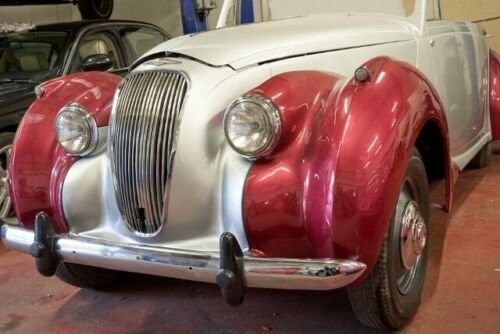
1952 Lagonda 2. 6-Litre Drophead Winter Project For Sale.
Registration no: 575 MOF
Chassis no: LAG/ 50/ 267
Engine no: LB6/ 50/ 327
This 1952 Lagonda is a ongoing restoration that needs finishing, all the parts are included to complete the restoration with the exception of a steering wheel, hood and carpets, all other parts are included, the body has had a recent respray, the seats have been restored and all leather has been recovered, all wood has been re veneered and all chrome has been re chromed, the engine turns with good compression, starter and generator, fuel tank and radiator has been rebuilt and a brand new fuel pump, V5 present, file of photographs to aid restoration call the details below for further details, the car can be viewed in Birmingham B6 7HG
It's said that when David Brown acquired Lagonda in 1947 all he got was a famous name, a collection of engineering drawings and a handful of prototypes. And although Lagonda's chief engineer and designer, the great W O Bentley, quit the firm when Brown took over, he did leave behind the 2. 6-litre, six-cylinder, twin-overhead-camshaft engine that would power the Aston Martin DB2 and the next generation of Lagonda's.
Although it retained a separate chassis, Bentley's 2. 6-Litre Lagonda was advanced in other ways, featuring independent suspension all round: by double wishbones and coil-springs at the front - a layout similar to that adopted on the DB4 - and semi-trailing arms at the rear where the brakes were mounted inboard to reduce un-sprung weight.
It had been intended that the new Lagonda would exploit a perceived gap in the luxury car market between Jaguar and Rover at one end and Rolls-Royce and Bentley at the other. W O's design succeeded brilliantly in this, being able to carry five persons and their luggage at high speed and in great comfort.
One of Lagonda's, and David Brown's, greatest assets was stylist Frank Feeley, the man responsible for the Italianate flair of the DB2, and while Feeley's 2. 6-Litre looked back nostalgically at the Lagondas of pre-war years, his prototypes produced on that chassis in the late 1940s hinted at the 3-Litre model to come.