
Description
H and H Classics Auction on 14th Jun, 2023 13:00
Imperial War Museum | Duxford, Cambridgeshire
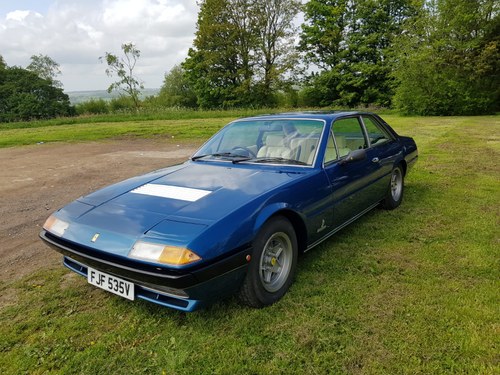
1979 Ferrari 400 GT
1 of only 123 UK-supplied examples
Estimate
£26, 000 - £30, 000
Buyer's Premium applies (subject to a minimum charge and VAT)
Lot details
Registration No: FJF 535V
Chassis No: 27387
MOT: T. B. A
1 of only 123 UK-supplied, right-hand-drive examples manufactured (from a total of 502)
Entered from a private collection, in which it has resided since 2004
Subject to a recent bare metal bodywork restoration, interior refresh, and carburettor overhaul
Rated as ‘very good’ or ‘excellent’ throughout by the vendor
For many years Ferrari was famous only for making two-seater cars, it's very first close-coupled four-seater (the 250GT 2+2) going on sale in 1961. That car soon established a new pedigree within the brand, leading to the arrival of a new, larger, and more spacious 365GT4 2+2 in 1972, and to the car which supplanted that model, the 400GT, in 1976. All Ferraris built in this period were costly, low-production machines, based on increasingly complex tubular chassis frames, clad in hand-crafted body shells which had been styled by Pininfarina, and which were produced at the Scaglietti coachbuilding works in Modena.
At this time, progression from one model's chassis to the next was evolutionary, rather than revolutionary, so even when the 400GT arrived it was possible to trace its lineage back to the 1960s, though, of course, the newcomer had all-independent suspension and four-wheel disc brakes. All the four-seaters were powered by one or other of the several types of Ferrari's famous vee-12 engines. Launched in 1972, the 365GT4 2+2 (of which 525 examples were built) had a smart four-seater style, but only two passenger doors, and used the familiar 4390cc V12, which had twin overhead camshafts per bank. When the 400GT took over four years later, the self-same body style was retained, but the engine grew to 4823cc and produced 340bhp. This was the very first Ferrari on which automatic transmission (a GM design) became optional, with the top speed of such cars being 156mph.
In the three-year production period, just 502 400 GTs were produced (with a mere 123 of which being supplied to the UK in right-hand-drive specification) before, in 1979, it was replaced by the fuel-injected 400i, which had identical styling, and finally, the 4943cc engined 412 then took the pedigree through until 1988. Manufactured new in 1979, the 400 GT offered is one of the United Kingdom supplied cars, being registered new here on the 11th of August 1979. Finished in Blue Monaco Metallic paintwork with Magnolia and Blue leather interior upholstery, ‘FJF 535V’ was specified from the factory with the automatic transmission. Acquired into the current private collection in 2004, the 400 covered just shy of 84, 000 miles at the time of consignment and has covered less than 1, 000 miles in the last thirteen years.
Lavished with a professional renovation over the last few years, the 400 has benefitted from a bare metal bodywork restoration and repaint; a mechanical renovation that comprised brake calipers renovated, carburettors soda blasted and overhauled, and new downpipes; a refreshed interior with the seats refurbished and the dashboard wood re-lacquered; and the alloy wheels have been fully refurbished and shod with new tyres.
Elegantly understated and seemingly great value, this Prancing Horse is due to be provided with a fresh MOT certificate in time for sale, the Ferrari is accompanied by over 100 images of the restoration work that has been completed. A very rare opportunity with only 123 UK-supplied, right-hand-drive 400 GTs produced, and with the example offered being a freshly renovated example that is rated as ‘very good’ in regards to engine, electrical equipment, gearbox, and interior trim, and ‘excellent’ regarding ‘bodywork’ and ‘paintwork’ by the vendor, it seems an appealing prospect.