
Beschreibung
Visit our YouTube channel to see the vehicle in motion.
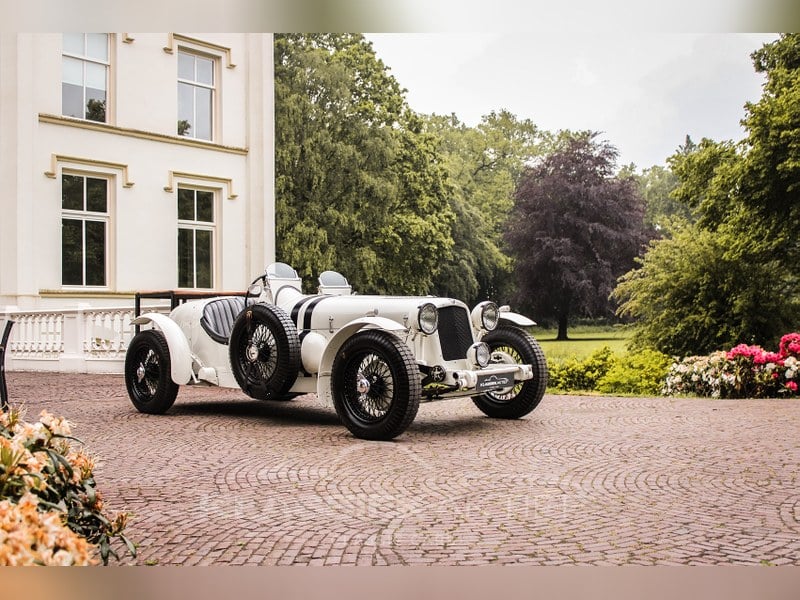
Anspruchsvolles Special Gut dokumentierte Geschichte Perfekt für Bergrennen Der Alvis 12/ 70 sollte das letzte Fahrzeugdesign von George Lancaster (Gebrüder Lancaster, Pioniere der britischen Automobilindustrie) sein. Er hatte ein kürzeres Chassis und einen stärkeren Motor als seine Vorgänger und zeichnete sich durch seine sportlichen Eigenschaften aus. Der 12/ 70 setzte indirekt auch die Tradition des Vierzylinder-Sportmodells 12/ 60 fort, das 1933 eingestellt wurde.
Die Fahrzeuge verfügten über einen 1, 9-Liter-Motor mit hängenden Ventilen und 2 SU-Vergasern. Das 4-Gang-Getriebe ist bis auf den 1. Gang synchronisiert. Von 1937 bis 1940 wurden insgesamt 741 Exemplare gebaut, von denen heute noch etwa 120 erhalten sein sollen. Laut dem vorliegenden Alvis Car Record wurde unser Fahrzeug am 10. November 1939 an Swallow, Milburn & Co. LTD in Newcastle on Tyne mit einer "Saloon"-Karosserie ausgeliefert. Die Tochter des Erstbesitzers hat ihre Erinnerungen an den Wagen aufgeschrieben. Er blieb bis 1950 in erster Hand, als er nach einem Unfall in die Midlands weiterverkauft und dort als Spezialfahrzeug für die Teilnahme an Bergrennen umgebaut wurde. 1996 wurde er erneut in England restauriert und im Jahr 2000 nach Deutschland verkauft.
Hier nahm der Vorbesitzer an diversen Oldtimer-Veranstaltungen teil, z. B. Klausenrennen 2002 und 2006 oder Nürburgring Vintage 2005. Der bisher letzte Besitzer erwarb den Alvis vor 14 Jahren. 2013/ 14 ließ er den Motor komplett überholen und die Leistung dezent steigern, ohne die Haltbarkeit zu beeinträchtigen. Die Rechnungen dazu liegen vor (ca. 22. 000 €). Er setzte den Alvis auch hauptsächlich in seinem angestammten Revier ein: Bergrennen u. a. Großglockner GP 2017, Edelweiss-Bergpreis Rossfeld 2022 Ein zuverlässiges, hochwertig restauriertes Special mit gut dokumentierter Historie und wunderschönen Originaldetails. __________________________________________________ __________________________________________________ _________________ Die angegebenen Details sind unverbindliche Beschreibungen. Sie stellen keine zugesicherten Eigenschaften dar. Der Verkäufer haftet nicht für Irrtümer, Eingabefehler und Datenübertragungsfehler.