Beskrivning
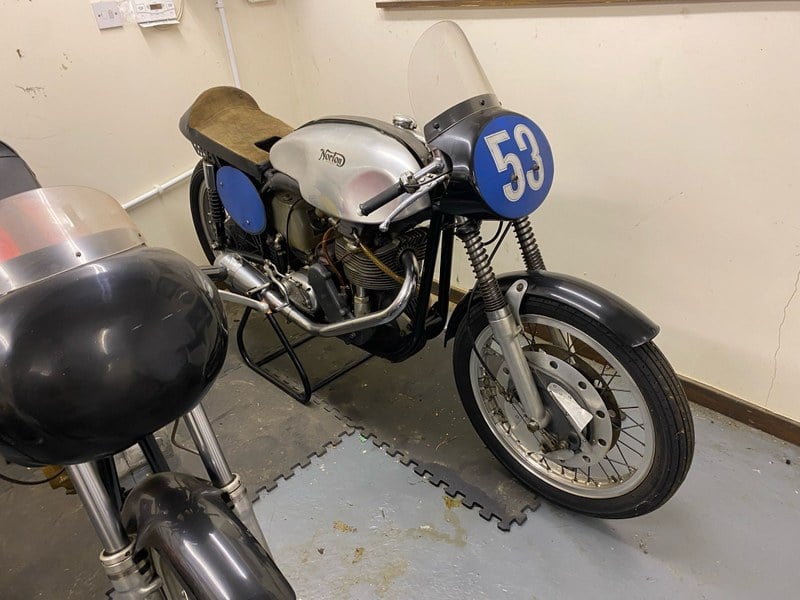
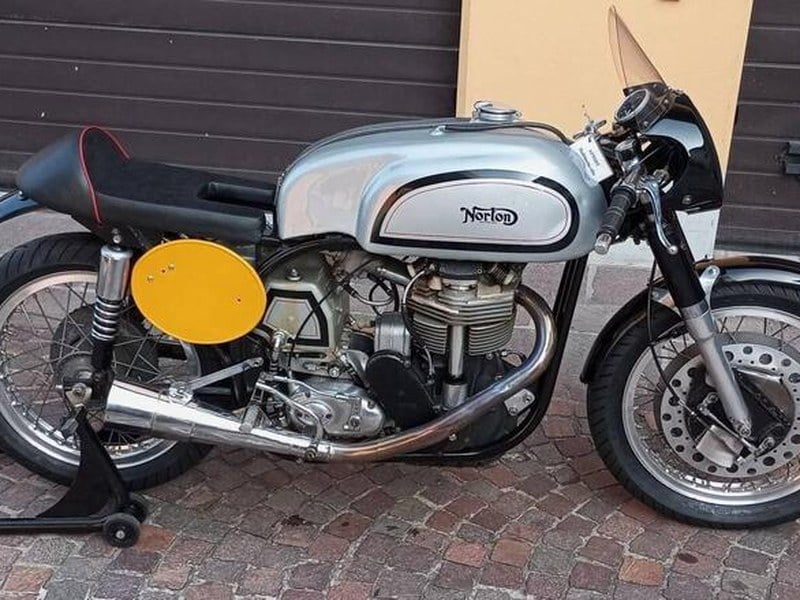
This motorcycle is Lot 43 of Bonhams Motorcycles Online – The Spring Sale; open for bidding 13-23rd February 2026. This Lot is available for public view and eventual collection from Bonhams Motorcycle Department, Milton Keynes. Please see the Bonhams website for full details. Auction Timings: Bidding on all Lots commences Friday 13 February, 12:00 noon. Bidding closes Monday 23 February, 12:00 noon, starting with Lot 43 Each subsequent Lot will then close one minute apart unless bidding remains active. Public Viewing (BY APPOINTMENT ONLY): All Lots: Wednesday 18 February, 9am - 5pm Please email using the button below with your availability to schedule an appointment. Lot 43 Believed Doug Hele experimental c. 1954/ 1960 Norton 350cc Manx 'Outside-Flywheel' Racing Motorcycle Registration no. not registered Frame no. none visible Engine no. obscured by flywheel "Norton, under Doug Hele's guidance, also had a desmo model on the Island (in 1960). This was a 350cc model with a bore and stroke of 86x60mm. The very much over-square dimensions were explained by the fact that it was being used to test valves at high revs for the larger desmo engine. It also featured an outside flywheel with two-piece crankshaft running on roller bearings." - Mick Walker, Manx Norton. Throughout the 1930s and in the years immediately following WW2, Norton's overhead-camshaft single-cylinder racers dominated their classes at national and international level. The introduction of the 'Featherbed' frame in 1950 enabled Bracebridge Street to keep abreast of the European multi-cylinder opposition for a few more years, and the combination of Geoff Duke and Norton took the 350cc and 500cc World Championships in 1951 and the 350cc again in 1952. As far as World Championships were concerned, that was the end of the line (on two wheels at least) though the works continued to develop their ageing singles into the early 1960s, many of the advances made finding their way on to the customer Manx version. Developments tried on the factory bikes included the innovative 'kneeler' frame, 'proboscis' streamlining, and a horizontally mounted motor (the F-Type). In addition there were countless improvements made to the engine: cylinder bores were enlarged progressively and strokes shortened accordingly; desmodromic valve gear experimented with; and coil ignition tried together with a host of other innovations, including outside flywheels. The latter first appeared on the factory bikes at the start of the 1954 season, their arrival coinciding with the adoption of bore/ stroke dimensions of 78x73mm (350) and 90x78. 4mm (500). The gains in switching to an outside flywheel were twofold: enabling the adoption of a smaller (bob-weight) crankshaft and a shorter ***-rod more proportionate to the reduced stroke, together with a commensurate reduction in engine height and weight. At the same time the over-the-counter Manx racers' internal dimensions changed to 76x76. 85mm (350) and 86x85. 8mm (500), though the outside flywheel was never a feature of these customer models. Like their works cousins, the new Manxes featured a top bevel housing integral with the cylinder head, and cylinder finning partially surrounding the vertical bevel drive. The numerous upgrades to the '54 works bikes also included a tubular finned oil cooler mounted on the off-side front downtube; a new engine breather with twin flap valves to the front of the crankcase; and a finned lower bevel housing. At the same time the gearbox changed from the familiar 'laid-down' Norton type to a special five-speed Burman. Another unusual feature of the '54 factory machines was an AC fuel pump, driven off the end of the inlet camshaft, which pumped fuel from the pannier tanks to the top tank. Some sources suggest that in addition to the outside-flywheel engines built for the works team, around a dozen were made available to favoured customers, although this is not known for certain. Despite the best efforts of factory rider, Ray Amm, by the end of the 1954 season it was all too apparent that Norton's single cylinder racers were no longer competitive with the multi-cylinder opposition. The racing programme was scaled down accordingly, and the factory's participation in 1955 would be with specially prepared Manx models, use of the works specials being confined to the Isle of Man TT. Nevertheless, as described above by the late Mick Walker, chief engineer Doug Hele continued to experiment with novel ways of making the Manx more competitive. This very rare and highly unusual Norton Manx has been in the current family ownership for at least a third of a century. The engine appears to be one of Hele's ultra-short-stroke (86x60mm) outside-flywheel 350s (albeit not a desmo), while the gearbox, frame and tank all look works. It is particularly worthwhile noting that the gearbox is stamped 'TT 53' and that there is an AC fuel pump (blanked off) connected to the inlet camshaft (see above). Given what is known about Hele's...