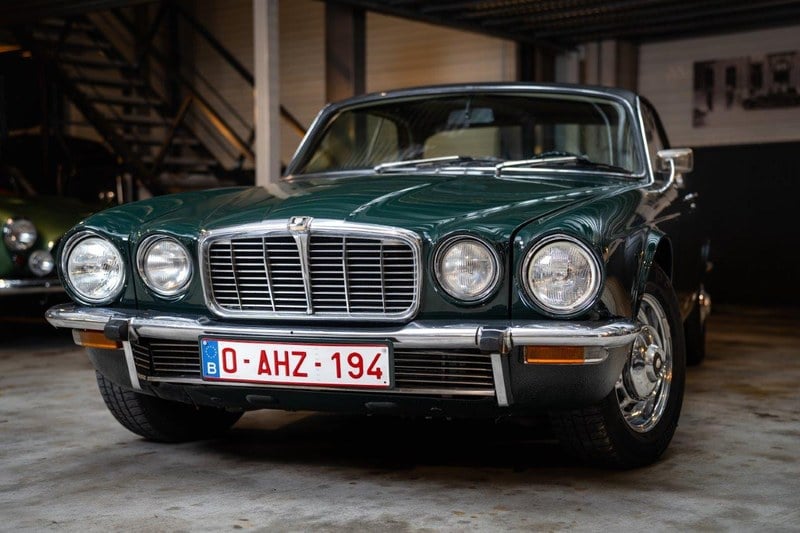


Description
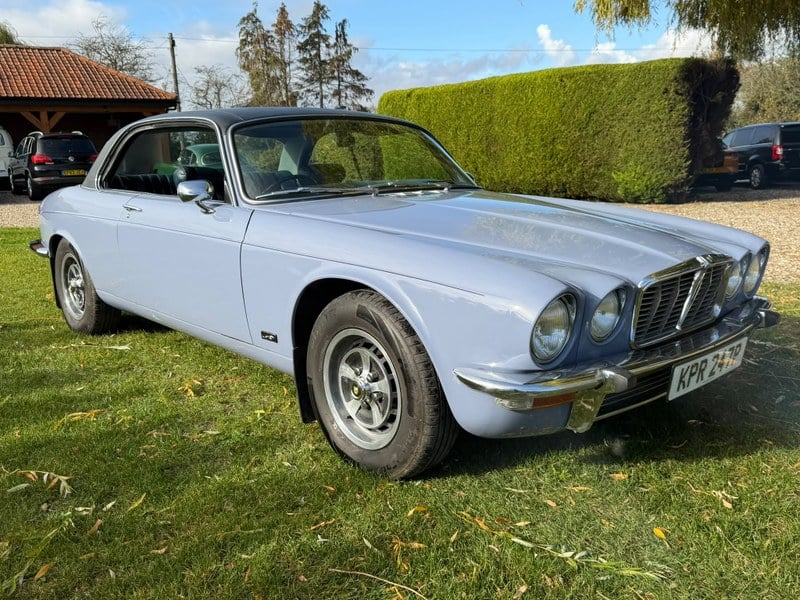
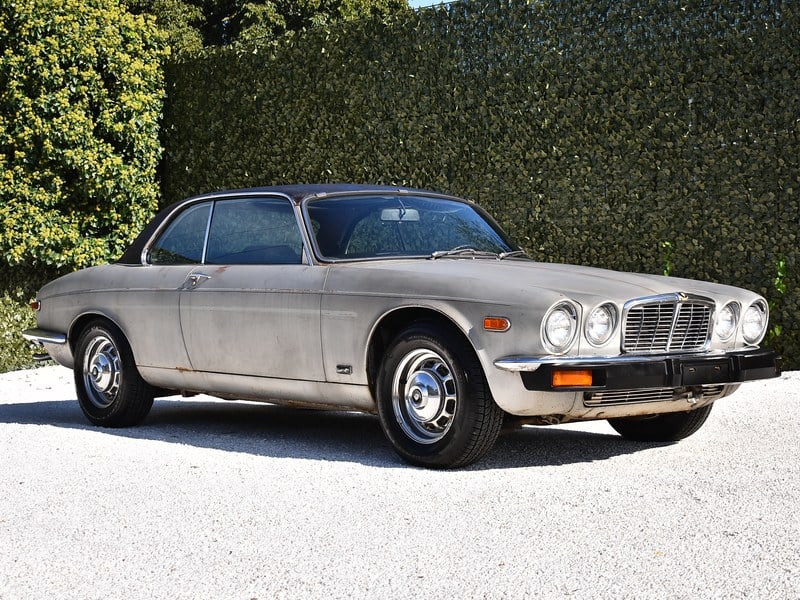
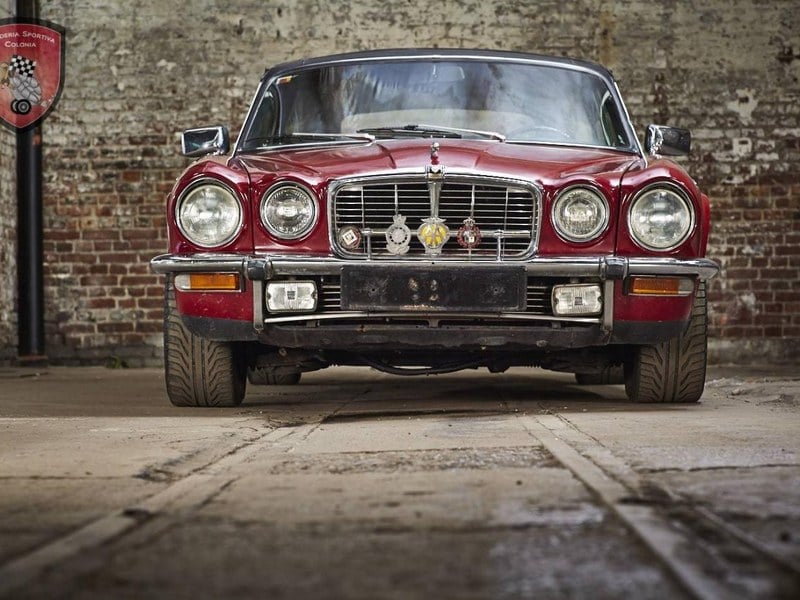
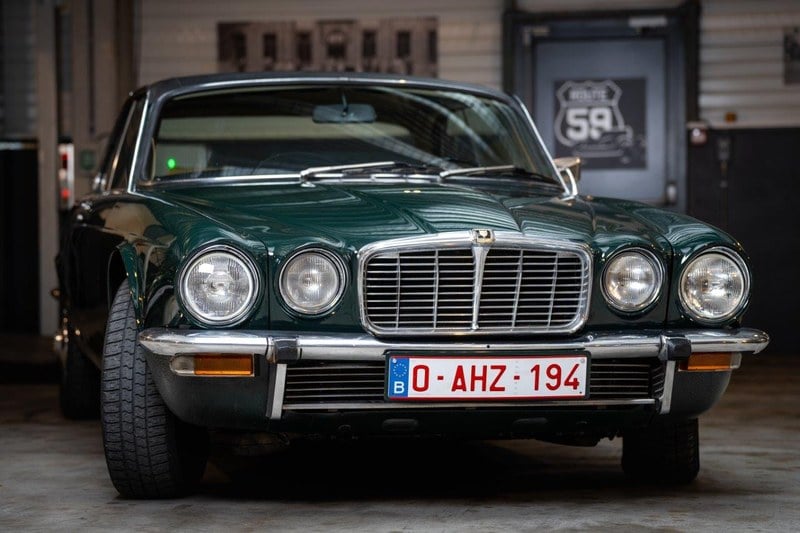
The Jaguar XJC (often written XJ-C) is the two-door coupé variant of the XJ Series II saloon, conceived to offer the same refined luxury but with a lower, more taut and more exclusive silhouette.
The project existed on paper from the late 1960s, but Jaguar revealed it to the public later, notably at the London Motor Show in October 1973... before having to wait a long time to bring it into production.
This delay mainly stems from a very concrete point: the XJC adopts a pillarless hardtop bodyshell with frameless glass, giving a very grand-touring silhouette, but making the sealing and alignment of the windows significantly harder to make reliable.
Added to this is a difficult industrial and economic climate in the mid-1970s (the British Leyland era and the aftershocks of the oil crisis), which did not help speed up the launch.
When it finally reaches showrooms, the XJC adopts the short-wheelbase of the XJ Series II: long doors, stretched roofline, and that very "English club" look that immediately sets it apart from a four-door XJ.
The philosophy is less that of a pure sporting coupé than a prestige coupé, built to cover miles quickly and calmly, with an interior presentation and comfort typically Jaguar.
This example was sold new in Europe in December 1977. The certificate of conformity is still present.
For a 1977 XJC in 4. 2 L, you have the famous XK inline-six of 4, 235 cm³, double overhead cam, which is something of the brand's historical heart during this period. The XJC could be ordered with this 4. 2 or with the 5. 3 V12, but the 4. 2 is often regarded as the best balance between flexibility, running costs and a traditional mechanical character.
The year 1977 is particularly significant as it marks the end of the line: production of the XJ coupés ceased in November 1977 (with a few final registrations depending on markets), which explains their rarity today.
According to commonly cited production figures, the XJC 4. 2 totalled around 6, 487 units over the entire run, of which 1, 776 were in 1977, making it a sought-after late-series model.
It has covered 125, 500 km and is in very nice condition both aesthetically and mechanically. It shows no rust, and the interior remains in superb original condition. It is also fitted with electronic ignition 123 and underwent a full service in 2026.