
Description
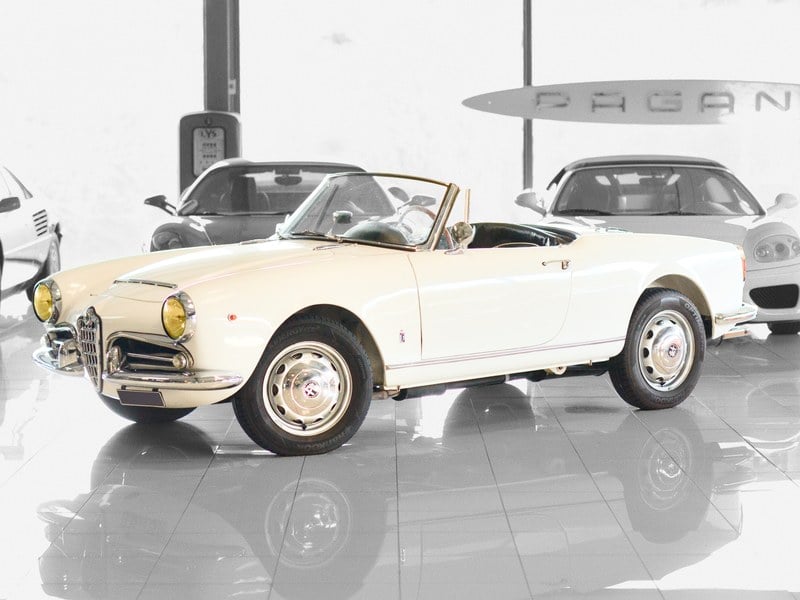
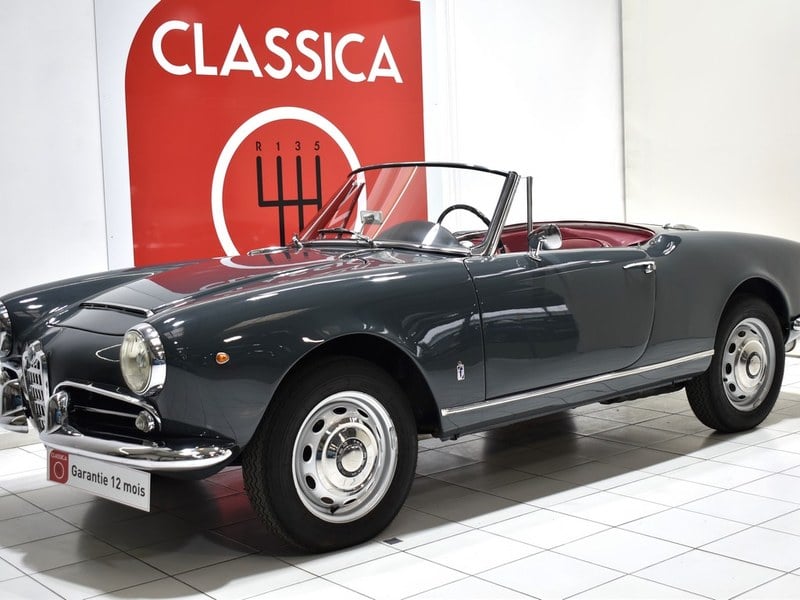
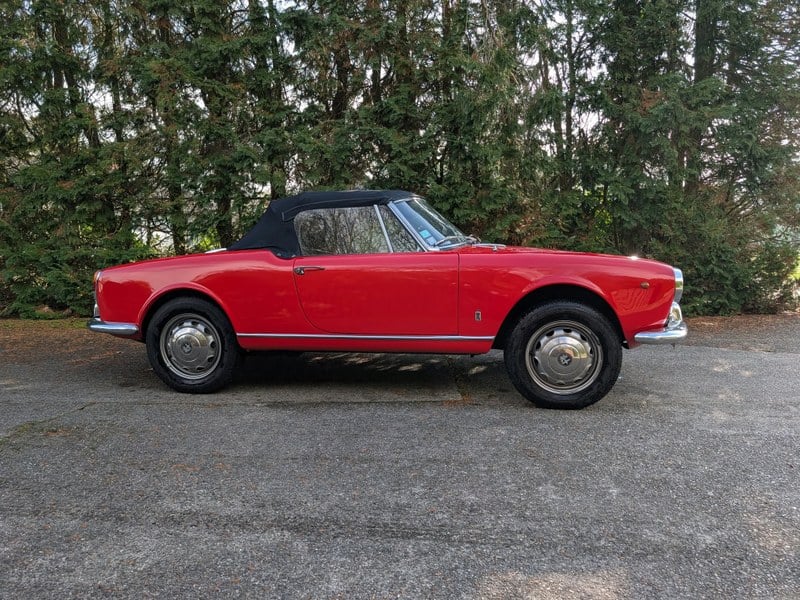
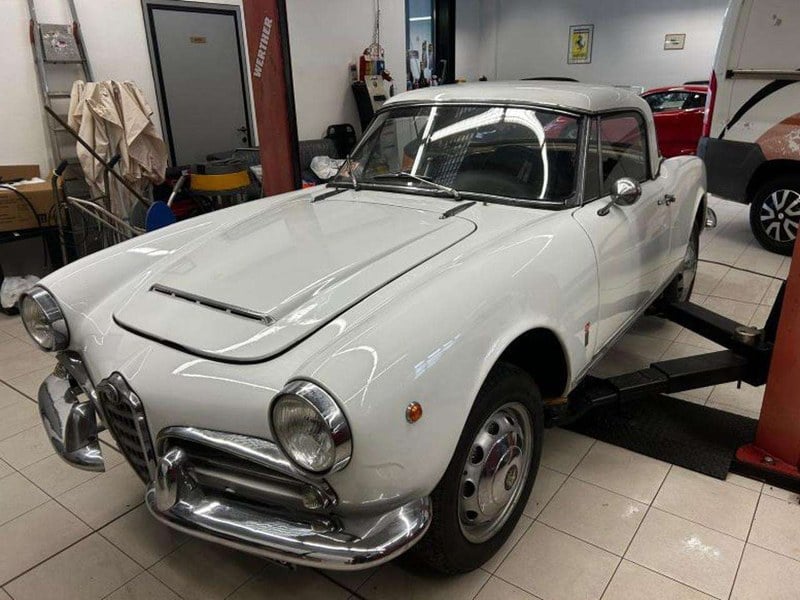
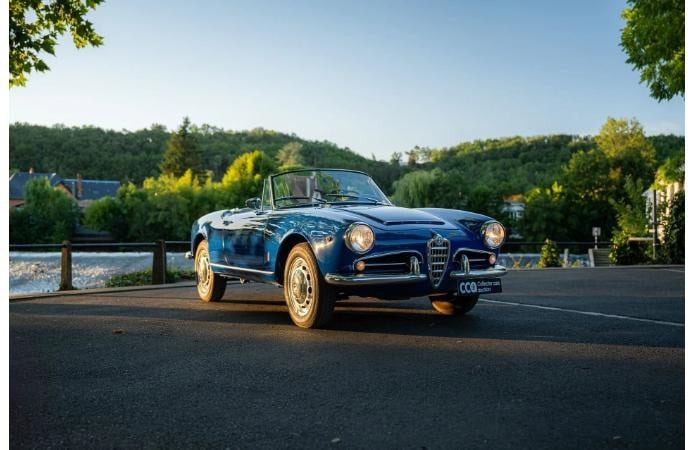
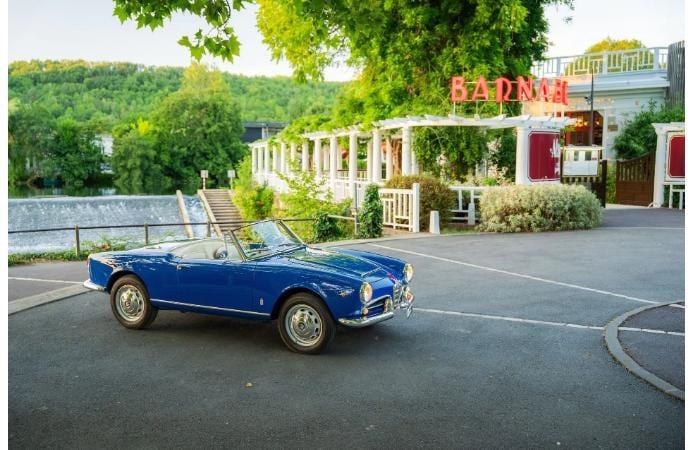
1965 – Alfa Romeo Giulia Spider The embodiment of the Italian spider and the Dolce Vita! French registration document - The first production Alfa Romeo Spider, designed by Pinin Farina, in 1600 cc version - Stunning colour combination, deep blue with white leather interior - Complete restoration by specialist Bergia Paolo in the early 2010s - Only 7, 680 km since the overhaul and same owner for over 10 years - Invoice for over €77, 000, 2014 expert report and clean MOT - Car ready to drive, equipped with front disc brakes and a very rare hard-top In 1955 the Alfa Romeo Giulietta Spider, which fits into the industrial growth of the Milanese marque, inaugurates a new line of small sports cabriolets. It was notably created at the request of the famous New York importer Max Hoffman, who guaranteed to sell it to the American clientele, who were very keen on this type of vehicle. The Bertone design studio worked on the project, but it was ultimately Pinin Farina's proposal that was retained, both for budgetary reasons and material production capacity constraints. Whilst the design of the coupé version, the Giulietta Sprint, was already very successful and had received an enthusiastic reception, the lines of the Spider, signed by Pinin Farina, are fabulous and met with universal approval. Despite modest displacement, the Giulietta benefited from advanced technology with a fully light-alloy twin-cam overhead engine. It underwent several evolutions, first a Veloce version with sharper mechanics, then second-series vehicles, with an extended wheelbase, a more powerful engine (80 bhp) and a synchronised gearbox from 1959 onwards. Finally, in 1962 came the main evolution of the Giulietta Spider: the Giulia Spider. Launched at the same time as the new Giulia TI of the period, the Giulia Spider uses the same "Bialbero" four-cylinder twin-cam light-alloy engine, but of 1570 cc following the increase in bore and stroke compared to the Giulietta. This engine developing 92 bhp and paired with a fully synchronised 5-speed gearbox, still quite rare for the period, allowed the Giulia Spider to reach 172 km/ h and gain in smoothness and reliability compared to its predecessor. A Veloce variant made its appearance again, in 1964, this time raising power to 112 bhp. Aesthetically, this Spider differs with its bonnet incorporating an air intake underlined by a chrome strip, whilst internally, everything that makes its charm remains unchanged with a painted steel dashboard, three round dials, a floor-mounted gear lever and quality leather seats. At once compact, lightweight, manoeuvrable and nimble, driving the Giulia Spider is pure pleasure, with sharp and direct engine responses, in a characteristic pleasant acoustic environment. To top it all off, its attractive styling became an icon of post-war cinema, thus embodying the "Dolce Vita" and reinforcing its legend. The Giulia Spider was produced in 9, 250 examples before the Spider Duetto proudly took over from this model, which had become as emblematic as it was essential to the Alfa Romeo range. In 1955 the Alfa Romeo Giulietta Spider, which fits into the industrial growth of the Milanese marque, inaugurates a new line of small sports cabriolets. It was notably created at the request of the famous New York importer Max Hoffman, who guaranteed to sell it to the American clientele, who were very keen on this type of vehicle. The Bertone design studio worked on the project, but it was ultimately Pinin Farina's proposal that was retained, both for budgetary reasons and material production capacity constraints. Whilst the design of the coupé version, the Giulietta Sprint, was already very successful and had received an enthusiastic reception, the lines of the Spider, signed by Pinin Farina, are fabulous and met with universal approval. Despite modest displacement, the Giulietta benefited from advanced technology with a fully light-alloy twin-cam overhead engine. It underwent several evolutions, first a Veloce version with sharper mechanics, then second-series vehicles, with an extended wheelbase, a more powerful engine (80 bhp) and a synchronised gearbox from 1959 onwards. Finally, in 1962 came the main evolution of the Giulietta Spider: the Giulia Spider. Launched at the same time as the new Giulia TI of the period, the Giulia Spider uses the same "Bialbero" four-cylinder twin-cam light-alloy engine, but of 1570 cc following the increase in bore and stroke compared to the Giulietta. This engine developing 92 bhp and paired with a fully synchronised 5-speed gearbox, still quite rare for the period, allowed the Giulia Spider to reach 172 km/ h and gain in smoothness and reliability compared to its predecessor. A Veloce variant made its appearance again, in 1964, this time raising power to 112 bhp. Aesthetically, this Spider differs with its bonnet incorporating an air intake underlined by a chrome strip, whilst internally, everything that makes its charm remains unchanged with a painted steel dashboard, three round dials, a floor-mounted gear lever and quality leather seats. At once compact, lightweight, manoeuvrable and nimble, driving the Giulia Spider is pure pleasure, with sharp and direct engine responses, in a characteristic pleasant acoustic environment. To top it all off, its attractive styling became an icon of post-war cinema, thus embodying the "Dolce Vita" and reinforcing its legend. The Giulia Spider was produced in 9, 250 examples before the Spider Duetto proudly took over from this model, which had become as emblematic as it was essential to the Alfa Romeo range.