Description
Long before World War II, AC had earned a reputation for building very well-designed sports cars, delivering excellent performance thanks to the internally designed modern 2-litre, 6-cylinder, overhead-cam engine.
With the post-war 2-litre model, AC succeeded in producing a more practical and comfortable saloon, while retaining both performance (still thanks to the same 2-litre 6-cylinder engine) and a stylish stance.
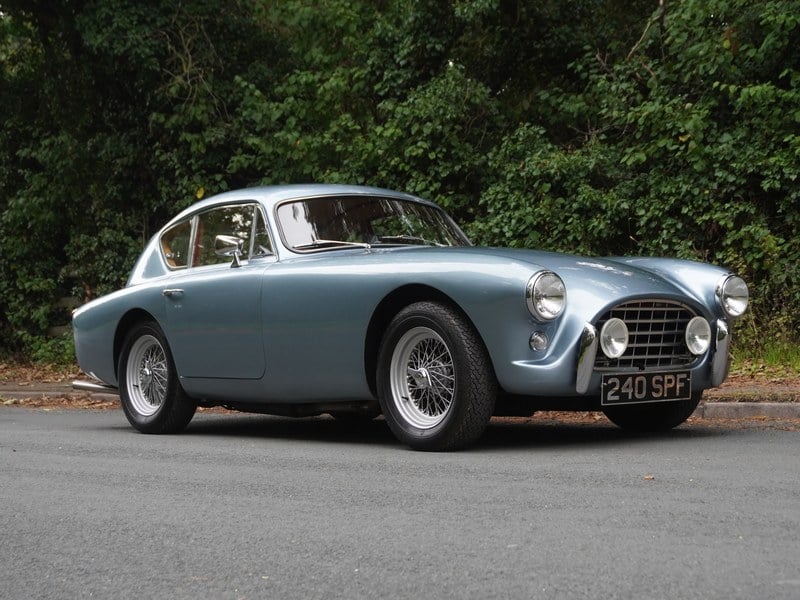
For the 1949 model year, a Drophead Coupé was introduced. At the time, this model was regarded as a superb drophead car, described by the Motor Industry magazine as follows: “Dream Car from Ditton”! Only 15 examples were built in total, of which the AC club recorded only 6 still existing.
The 1991 cm3 six-cylinder engine of the car, with a wet sleeve and aluminium cylinder block, was the unit offered for the first time in the AC 16, in 1922. From 1947, the engine was fed by three SU carburettors and developed 75 bhp.
The aluminium bodywork on a wooden frame sat on a conventional steel chassis with rigid front and rear axles, with semi-elliptic leaf springs and, for the first time on an AC, hydraulic dampers. Until 1951 the car had a hybrid braking system, hydraulically operated at the front and cable-operated at the rear with 305 mm drums.
The car changed very little over its ten years of production, although wheel size increased slightly to 406 mm in 1951. The AC 2-litre outlived its engine, which continued to be offered in other AC models until 1963.
This example is one of the six surviving units. Restored in the early 1990s, it underwent a further refurbishment, including an engine overhaul in 2009, at a cost of £18, 000.
This car is widely described in Leo Archibald’s book on AC saloons and sports cars, of which a copy is included with the car.
A very complete historical file accompanies the car, the receipts having been kept in the file. The car retains its original jack, its starting crank and a full toolkit included in the boot lid. The pedals bearing the AC logo and the oil can under the bonnet are among the many features that make this car unique. The original semaphore indicators still function, although indicators have been added.
The car is presented extremely well. It has been used regularly but sparingly over the years. The car is accompanied by a large number of historical documents, including the original registration book.
The car is now on Belgian historic registration.