Descrição
Bem antes da Segunda Guerra Mundial, a AC ganhou reputação por fabricar carros desportivos muito bem concebidos, com desempenhos excelentes, graças ao motor moderno de 6 cilindros em linha de 2 litros com árvore de came no cabeçote, concebido internamente.
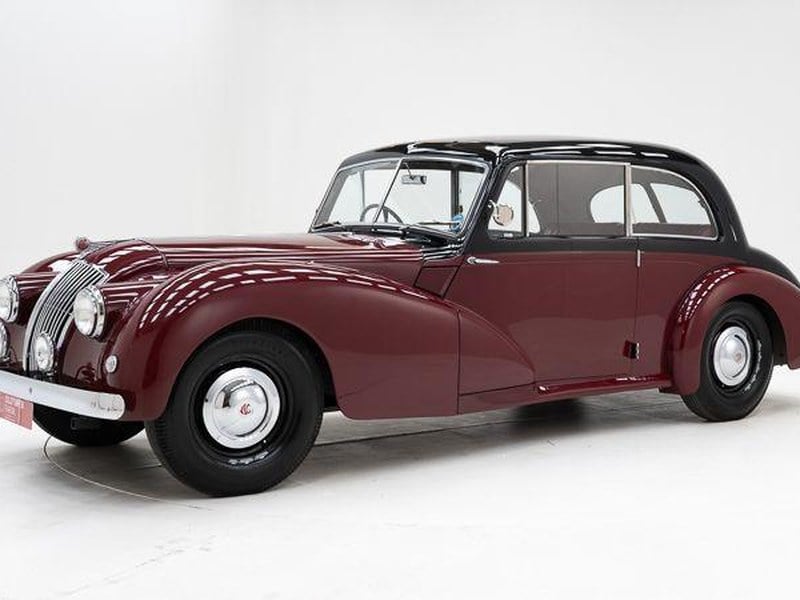
Com o modelo de 2 litros pós-guerra, a AC conseguiu produzir uma berlina mais prática e confortável, mantendo tanto o desempenho (sempre graças ao mesmo motor de 6 cilindros de 2 litros) quanto uma aparência elegante.
Para o ano-modelo 1949, foi introduzido um modelo Drophead Coupé. Na altura, esse modelo era considerado um excelente automóvel descapotável, descrito pela revista Motor Industry como segue: « Dream Car from Ditton »! Apenas 15 exemplares foram construídos no total, dos quais o clube AC registou apenas 6 ainda existentes.
O motor de seis cilindros de 1991 cm3 da viatura, com bloco de alumínio e câmara húmida, foi a unidade apresentada pela primeira vez no AC 16, em 1922. A partir de 1947, o motor era alimentado por três carburadores SU e apresentava uma potência de 75 cv.
A carroçaria em alumínio sobre uma estrutura de madeira foi montada num chassi de aço convencional com eixos rígidos à frente e atrás, com molas de lâmina semi-ellípticas e, pela primeira vez numa AC, amortecedores hidráulicos. Até 1951, o automóvel possuía um sistema de travagem híbrido, hidráulico à frente e a cabo atrás, com tambores de 305 mm.
O automóvel mudou muito pouco ao longo dos seus dez anos de produção, embora o diâmetro das rodas tenha aumentado ligeiramente para 406 mm em 1951. O AC 2 litros sobreviveu ao seu motor, que continuou a ser proposto em outros modelos AC até 1963.
Este exemplar é de 6 sobreviventes. Restaurado no início dos anos 1990, sofreu uma recuperação adicional, incluindo uma revisão do motor em 2009, a um custo de 18. 000£.
Este automóvel é amplamente descrito no livro de Leo Archibald sobre berlina e desportivos AC, cujo exemplar está incluído com o carro.
Um dossiê histórico muito completo acompanha o automóvel, com os recibos preservados no dossiê. O carro tem o seu macaco original, a manivela de arranque e um conjunto de ferramentas completo incluído na tampa do porta-malas. Os pedais com o logótipo AC e o bidão de óleo debaixo do capô são algumas das várias características que tornam este carro único. Os sinais semafóricos originais ainda funcionam, mesmo que tenham sido adicionados piscas.
O carro está extremamente bem apresentado. Foi utilizado com regularidade, mas de forma contida ao longo dos anos. O carro vem acompanhado de um grande número de documentos históricos, incluindo a caderneta de matrícula original.
O carro encontra-se agora com matrícula histórica belga.