Description
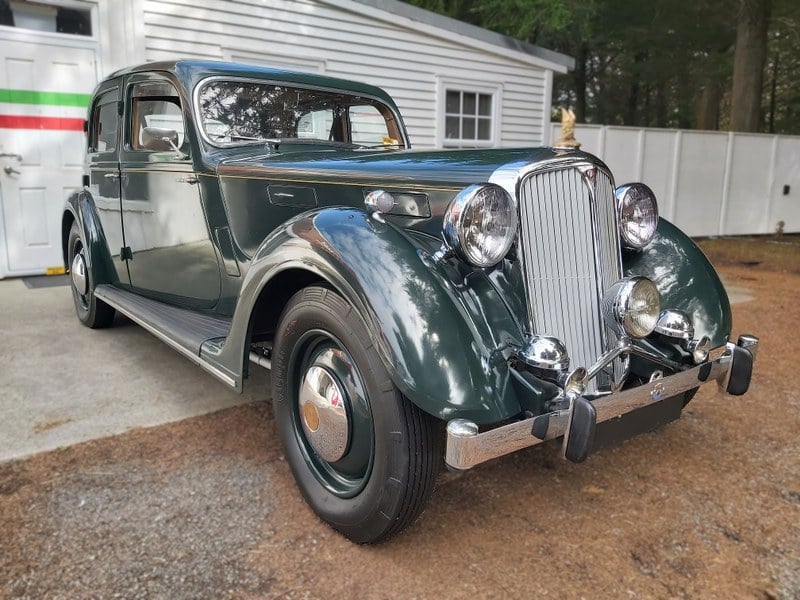
The 1947 Rover P2 16 stands as a remarkable bridge between pre-war craftsmanship and post-war resilience - a car that embodies the quiet dignity and engineering integrity that defined Rover in its formative years!
As part of the final evolution of the P2 range, the 16 was powered by a 2. 1-litre six-cylinder engine, delivering smooth, dependable performance through a four-speed manual gearbox.
With its separate chassis construction, elegant flowing wings, upright grille, and beautifully appointed interior, it was a car built not just for transport, but for presence.
In today’s market, these cars remain relatively affordable compared to many contemporaries, yet their rarity, particularly in sound, original condition, has seen steady appreciation as collectors begin to recognise their historical significance and charm.
ABOUT THIS CAR
This car was sold new in Melbourne, Australia. Imported into NZ in the year 2000 from Cootamundra, New South Wales Australia.
2. 1-litre inline 6-cylinder (IOE – inlet over exhaust)
Approx. 65–70 bhp
Smooth, torque-driven delivery suited to touring
4-speed manual gearbox
Rear-wheel drive
Separate ladder-frame chassis
Independent front suspension (coil springs)
Live rear axle with leaf springs
Distinctive pre-war styling with flowing wings
Upright chrome grille
Steel body over ash frame sections
Running boards
Rear-hinged (suicide) front doors
Timber dashboard and interior trim
Leather upholstery
Sunroof
Smiths instrumentation
Heater (period fitment)
Spacious cabin with upright seating position
Strong emphasis on durability and engineering integrity
Designed for comfort and long-distance touring rather than speed
Limited surviving numbers today, especially in good condition
Increasingly appreciated by collectors of pre- and immediate post-war British cars
Valued for originality, charm, and historical significance.
Comes with the Rover Viking mascot which represents the Viking long-ship emblem historically associated with Rover, symbolising strength, exploration, and engineering durability. On period cars like the P2, it’s a highly desirable and character-defining feature, adding both authenticity and visual appeal.
This particular 1947 example tells a story that goes beyond numbers and specifications. It speaks of a time when motoring was deliberate, when journeys mattered, and when a car was something to be cared for, not simply consumed. One can imagine it emerging in the immediate post-war years, a symbol of optimism and rebuilding - owned by someone who valued refinement without ostentation.
Over the decades, cars like this have survived not by accident, but by stewardship. Each owner becomes a custodian, preserving its character, its patina, and its story. The gentle hum of the straight-six, the mechanical honesty of its controls, and the reassuring solidity of its construction all serve as reminders of an era long gone but not forgotten.
Today, the Rover P2 16 occupies a unique position in the classic car world. It’s not about outright speed or showmanship, it’s about authenticity. It appeals to those who understand the subtleties of early motoring, who appreciate the craftsmanship in the woodwork, the quality of the materials, and the sense of occasion every drive provides.
As values of prewar, and immediate post-war vehicles continue to hold well, examples like this are becoming increasingly sought after, not just for their rarity, but for the experience they offer. In a world of fast-moving trends and fleeting attention, the P2 16 remains steadfast: elegant, enduring, and quietly captivating.
TRANSPORT / WORLDWIDE SHIPPING CAN BE ORGANISED ON THIS VEHICLE ON BUYER'S BEHALF AT BUYERS COST.
Viewing is STRICTLY BY PRIOR APPOINTMENT only.
PLEASE READ: The Purchaser is encouraged to personally fully inspect the vehicle and also to have the vehicle inspected, and fully assessed by an experienced, independent, specialist garage - before committing to purchase. While the Purchaser is entitled to rely on statements given by Waimak Classic Cars as being correct, where goods such as vehicles are concerned, with so many moving parts and rust being an issue with older vehicles; a Purchaser who chooses not to seek independent professional assistance when assessing the quality of what they propose to buy is considered as buying at their own risk, and if the vehicle then turns out to be of less than the represented quality, or not up to the Purchaser's expectation, or in the Purchaser opinion not fit for purpose; then the Purchaser is considered to have contributed to their own loss and should not expect any refunds or betterment from Waimak.