
Beskrivning
Byggd i maj 1971 och först registrerad den 1 augusti – med samma registreringsnummer KLM 1K som den bär idag – denna Ford Capri Mk1 3000E var ursprungligen ägd av direktören för en Ford-återförsäljare i Guildford. Han hade ett mycket gott förhållande till Fords säljchef i Storbritannien och kunde beställa specialbyggda bilar direkt från fabriken. Även om 3000E redan låg i topp i Capri-serien ville köparen ha något ännu mer exklusivt.
Han specificerade bilen från Fords Halewood-fabrik med ett specialbeställt pergamentinredning och lät Webasto installera en heltít soltak. Därefter vände han sin uppmärksamhet till att förbättra Capris prestanda.
Det fanns ett antal oberoende Ford-tuners och ingenjörer för racingförberedelser som verkade vid den tiden. En av de mest anmärkningsvärda var Broadspeed, som hade utvecklat ett eftermarknads karosskit och mekanisk ombyggnad för 3000GT, som de kallade Broadspeed Bullit – uppkallad efter filmen men stavades något annorlunda förmodligen för att undvika rättsliga problem.
Deras prestationsförbättringar inkluderade modifierade cylindrarhuvuden, en cam med hög lyftning, ny insugsmuffin och en omdesignad avgasrör, samt justerbar suspension och bromsar. Broadspeed gav också vanligtvis sina bilar en extern racing-stil med makeover som bland annat innebar övre och nedre spoilers, externa ventiler, borttagna stötfångare och en tvåfärgad lackering.
Med vetskap om att han inte ville se ut som en pojkracer i sin Capri, valde den ursprunglige ägaren endast Broadspeeds motor-, fjädrings- och bromsuppgraderingar, utan stylingpaketet – även om han lät plåtsmeden i sina egna verkstäder subtilt flära luftningarna för att rymma Minilite-däcken.
Efter att ha passerat genom flera ägare under de sista decennierna av 1900-talet – under vilken tid front- och bakspoilerna i “pojkracer”-stil lades till – restaurerades bilen under flera år från 2004.
Parallellt med detta arbete började ägaren undersöka bilens historia och verifiera att det faktiskt var en ”Broadspeed” Capri, trots att den inte såg exakt ut som en sådan. En fil som dokumenterar bilens fullständiga ägarhistoria är resultatet, vilken inkluderar korrespondens med den ursprunglige ägaren. De ovan nämnda avsnitten sammanfattar vad han avslöjade om bilens ursprung.
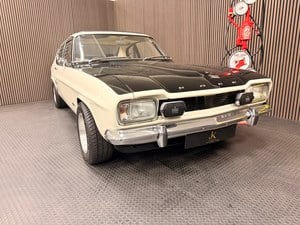
Under restaureringen för flera år sedan målades utsidan i vad vi tror är den ursprungliga fabriksfärgen Ermine/ Diamond White, accentuerad med en svart motorhuv, hakspoiler, vingar, A-stolpar, trösklar, fönsteromramningar och bakpanel.
Resultatet håller hög standard, utan kosmetiska brister eller fel som förtjänar att nämnas. Vi förstår att bilen har vårdats och förvarats exceptionellt väl under den senaste ägaren.
Karossens skick verkar också mycket gott, med jämna panelgap och låsningslinjer; troligen mycket bättre arbetade än när den lämnade Halewood 1971. Chromklädena och trim runt bilen är också i gott skick med bara den minsta patina på stötfångarna. Soltakets duk ser ut att vara i gott skick, då den förnyades under restaureringen.
Trots att basen i forskningen är att frontkinnspoiler och bakvinge inte är original för bilen, ser de inte malplacerade ut och skulle vara relativt enkla att ta bort om en framtida ägare ville återgå bilen till sin mer tillbakadragna 1971-funktion.
Bilen står på 13-tums Minilite-liknande hjul – bytta 2004 men trogna de optionerade originalen – som ser ut i utmärkt skick och är utrustade med Kumho Powermax-däck.
Varför pergamentinredningen var en specialorder från Ford Motor Company 1971 är en gåta, men kanske ansågs den vara alldeles för vit och ren för den genomsnittlige Capri-köparen. Den återlagnade klädseln i bilen – matchande den ursprungligt specificerade färgen – är långt ifrån genomsnittlig.
Sätena fram och bak verkar helt ospruckna med ingen slitage alls och inte ens någon veckning av användning. Dörrklädseln är i stort sett likadan och har vackert sydda fluting över mittpanelerna. Samma överdrag fortsätter upp till taknivå där den perforerade innerduken för Webasto-soltaket tar över.
Tacksamt är ratväxlaren i svart för att undvika den halvgenomskinliga speglande bländningen som uppstår på en solig dag med en ljus färgad instrumentpanel. Det ser ut som om den kan vara originalet men det finns inga sprickor eller annan skada som vi kan se och, så vitt vi kan bedöma, fungerar alla brytare och vred som de borde.
Interiören i bilen är så oklanderlig att inte ens de delar som vanligtvis utsätts för mest slitage visar tecken på användning; Moto-Lita-ratt, det läderklädda och svällande växelspaken samt det svarta mattan syns nästan orörda av människohänder (eller fötter).
Det finns ett ganska stort historikeföringsmappar med bilen – en liten resväska faktiskt – som rymmer alla slags tidningar, artiklar och broschyrer relaterade till bilen eller Broadspeed Capris i allmänhet. Det finns också många fakturor och MOT-rapporter.