Opis
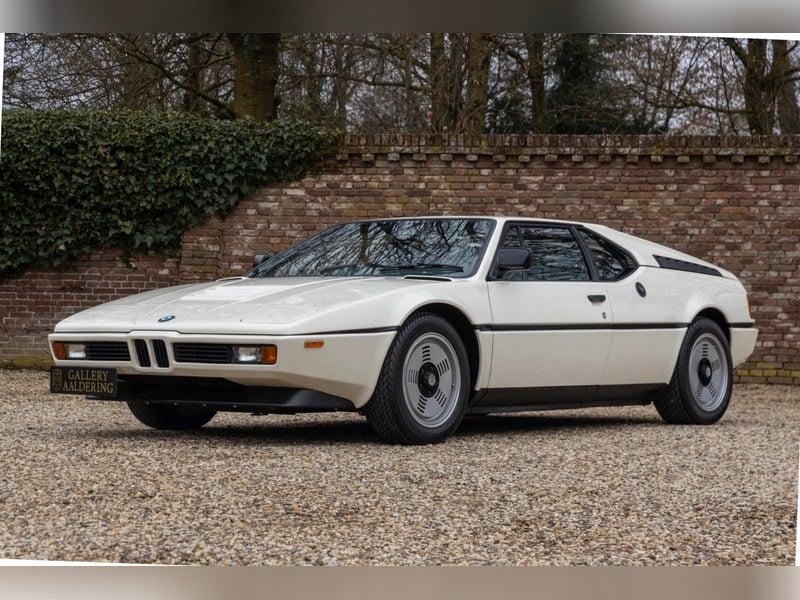
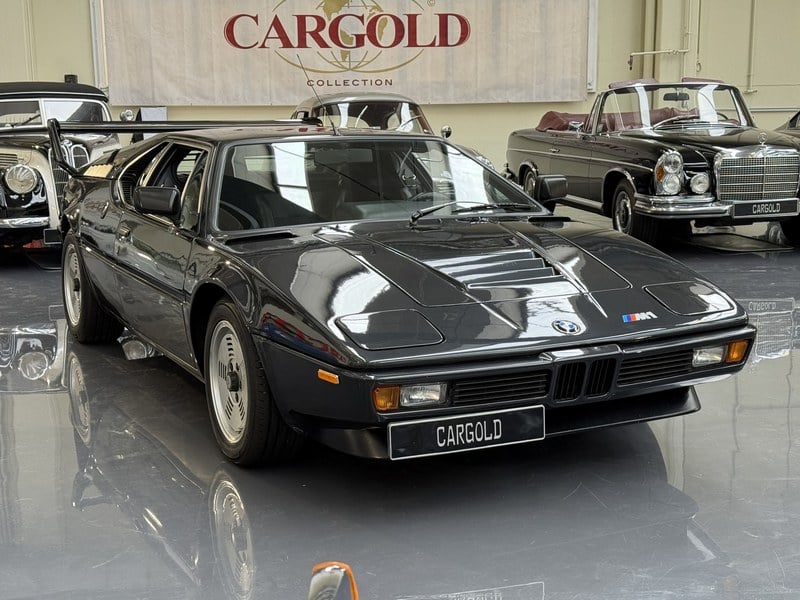
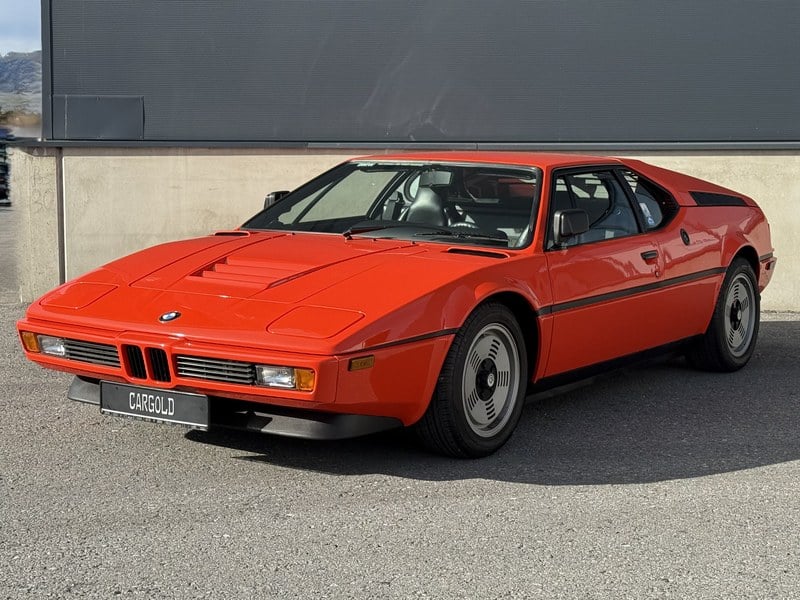
This vehicle is Lot 139 to be auctioned by Bonhams at The Zoute Sale, Sunday 11th October 2026. Please see the Bonhams website for full details. Auction Timings: Lots 1 - 174 are to be sold from 12:00 local time on Sunday 11th October 2026. Public Viewing: Available 7 October 2026, 10:00 - 20:00 CEST 8 October 2026, 10:00 - 18:00 CEST 9 October 2026, 10:00 - 20:00 CEST 10 October 2026, 09:00 - 19:00 CEST 11 October 2026, 09:00 - 18:00 CEST, at the auction venue.. Lot 139 1979 BMW M1 Coupé Registration no. Chassis no. WBSthe details below Engine no. M88 171 One of only some 450 built Delivered new in Germany Engine rebuilt circa 6, 000 kilometres ago Registered in France "Jochen Neerpasch was the man who was responsible for the birth of BMW's only production supercar. BMW's audacious Motorsport manager wanted a car to take over the racing mantle of the highly successful CSL, to create a car which could do battle with Porsche in the World Sports Car Championship and could win at Le Mans. Unlike the CSL, its successor would not be a front-engined car, but a radically different machine: it evolved as the mid-engined M1." - Chris Rees, BMW M-Series. A proposed Group 5 'Silhouette Formula' for production-based cars triggered the M1 programme in the mid-1970s, the basis being a mid-engined concept car designed in-house at BMW by Paul Bracq. Head of BMW's newly formed Motorsport Division, former racing driver Jochen Neerpasch was responsible for masterminding this ambitious project, whose aims included taking on rivals Porsche in the World Sports Car Championship and, ultimately, victory at Le Mans. M1 development was contracted first to Lamborghini and then to Giorgetto Giugiaro's Ital Design, although almost all cars ended up being built by coachbuilders Baur in Germany. Giugiaro's compact coupé bodywork in glassfibre was wrapped around a multi-tubular spaceframe chassis, while a twin-overhead-cam, four-valves-per-cylinder version of BMW's 3. 5-litre inline six, driving via a ZF five-speed transaxle, provided the motive power. The M1's wedge-shaped coachwork proved highly efficient aerodynamically, needing very little in the way of additional spoilers and wings in race configuration. Lamborghini's Gianpaolo Dallara had been responsible for developing the suspension, which followed racing practice by using unequal-length wishbones at front and rear. Soberly trimmed in black and grey, the M1's interior was exceptionally well equipped for a sports car, much of it sourced from the luxurious 6 Series. Notable featured included Recaro seats, air conditioning, electric windows, remotely operated door mirrors and a heated rear screen. First shown at the Paris Motor Show in 1978, the road-going version came with 273bhp and a claimed top speed of 161mph (260km/ h), while Autocar magazine managed to clock a highly respectable 0-60mph (0-96km/ h) time of 5. 5 seconds. Writing in Autocar and quoted by Chris Rees, racing driver John Miles commented that the M1 was "a beautifully responsive and sometimes thrilling motorcar... The throttle operates beautifully smoothly, and the engine responds beautifully to it at all ties... Once warm the M1 asks to be driven hard for hours on end... Perhaps the car's greatest joy is being able to consistently use its huge reserves of power to rocket out of corners and past others." Only ever intended as a limited-edition model, the M1 ceased production after a little over 450 examples had been built, just exceeding the minimum of 400 required for Group 4 homologation, which would have preceded homologation for Group 5. In the event, the abandonment of the Group 5 Silhouette Formula robbed the car of its raison d'être, though the one-make Procar BMW M1 Championship series run at Formula 1 Grand Prix races in 1979 and '80 provided BMW Motorsport with a valuable showcase by way of consolation. The series ran for only those two years, Nicki Lauda winning the championship in 1979 and Nelson Piquet in 1980. A new M1 road car was awarded to each winner. Out of the 453 production cars completed, 399 were road going units while the remainder were made for motor sport. Delivered new in Germany, this example is finished in red with contrasting black leather and fabric interior. The BMW has belonged to the current vendor since 2010 (the car that previously belonged to the director of one of the most prestigious French fine jewelry houses on Place Vendôme). There are invoices dating back to 2010 on file for various works, services and spares parts totaling approximately 50, 000. At 24, 468 kilometres the engine was comprehensively restored (photographs and invoices on file) and the clutch replaced by BMW Service at 30, 610 kilometres. The odometer reading at time of cataloguing was 30, 615 kilometres. An important landmark in BMW's history, and in particular of its involvement with motor sport in the post-war era, the M1 is already highly collectible and is surely destined to become increasingly sought after...