Description
History of the model and curiosities
The origin in the novels
In his books, Fleming initially had James Bond drive a 1930 Bentley 4. 5 Litre. The turning point came in the novel Goldfinger (1959):
The choice: Bond is given the choice by the MI6 fleet between a Jaguar 3. 4 and an Aston Martin DB Mark III (which Fleming simply calls "DB III").
The reasons: Fleming chose the Aston Martin because it reflected Bond's sophisticated taste and identity: a man who appreciates detail, good food, and fast yet elegant cars.
The first gadgets: Already in the book, the car was equipped with small special features, such as reinforced bumpers and a secret compartment for a Colt . 45, laying the groundwork for future cinematic gadgets.
The Royal Inspiration
It is believed that Fleming was inspired by a 1954 Aston Martin DB 2/ 4 Mk I belonging to the son of Lord Swinton (then head of MI5), which Fleming frequently drove. This royal car featured modifications unusual for the time, such as a two-way radio system and hidden storage compartments, which Fleming incorporated into his stories.
From Book to Screen
By the time the filming of Goldfinger came around, the DB Mark III was no longer in production. The producers therefore chose the British manufacturer's newest model: the Aston Martin DB5.
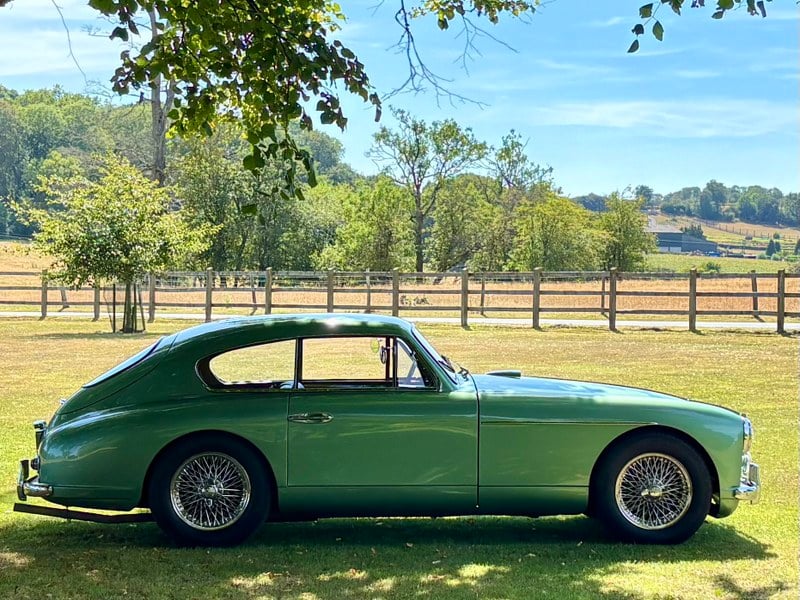
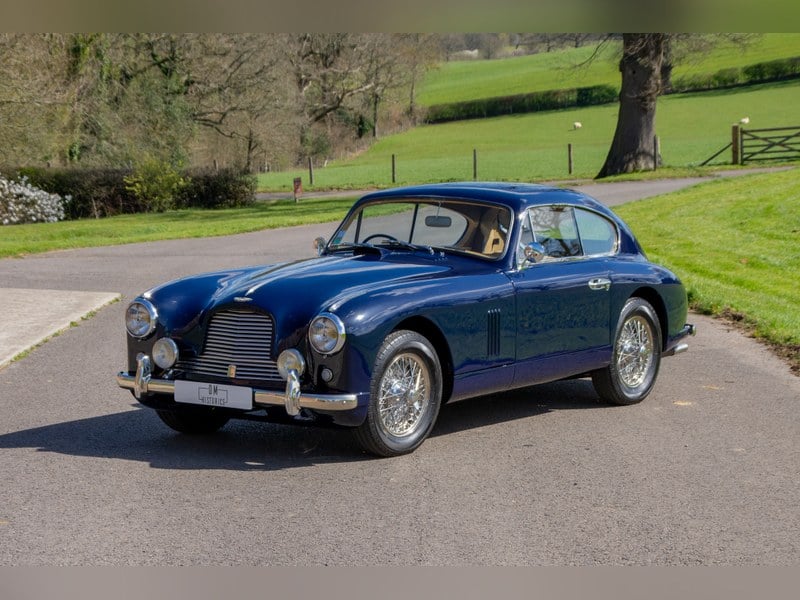
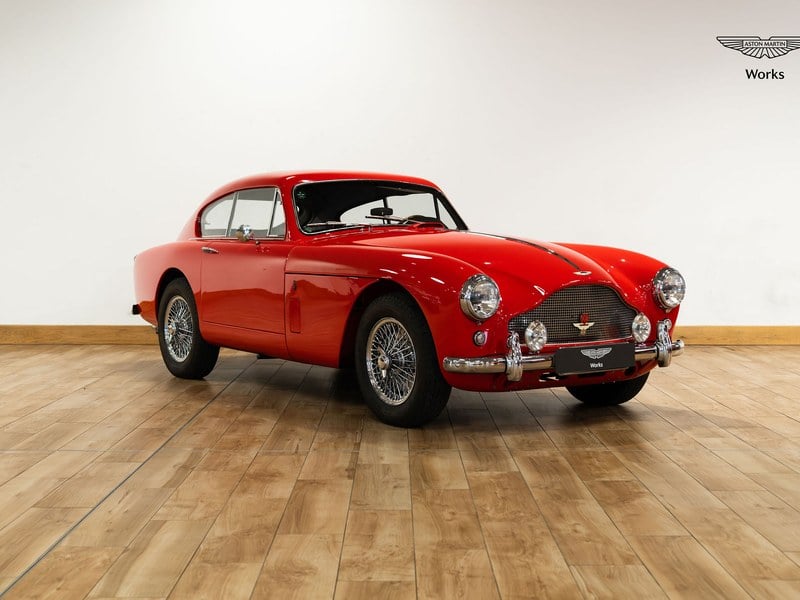
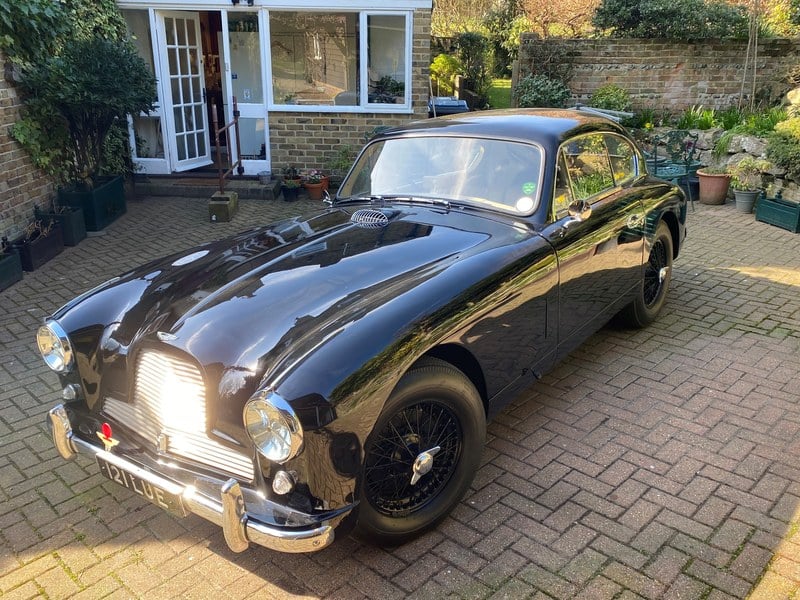
The DB 2/ 4 Mark III (formerly the DB Mark III, also known as the original Mark III) is a grand tourer produced by Aston Martin from 1957 to 1959. It was an evolution of its predecessor, the DB 2/ 4 Mark II, and retained the 2. 9-liter Lagonda straight-six engine.
In 1958, it was replaced by the Aston Martin DB4.
Based on the specifications of the radiator grille (designed by Bert Thickpenny and first seen on the DB3S), which would define the shape of all future Aston Martin models, it featured a new grille-shaped dashboard and Girling disc brakes from the first 100 examples. The hydraulically operated clutch was also new. The Laycock-de-Normanville overdrive was available as an option for the four-speed manual transmission; an automatic transmission was also available. The worm gear steering and live rear axle were retained. At the rear of the DB2/ 4 Mark II, the rear fins were enlarged (after 100 examples had been produced) and modified to resemble the Lucas taillights of the Humber Hawk and Alvis TD21.
By this time, Aston Martin had already begun considering a successor to the Frank Feeley-designed DB2 series, which ultimately led to the DB4. A new vision of the DB2/ 4 project was created and the new designer, John Turner, presented the front of the DB3S, which combined the design of the DB2/ 4, from 17 January. I know the basic concept of the DB Mark III.