Description
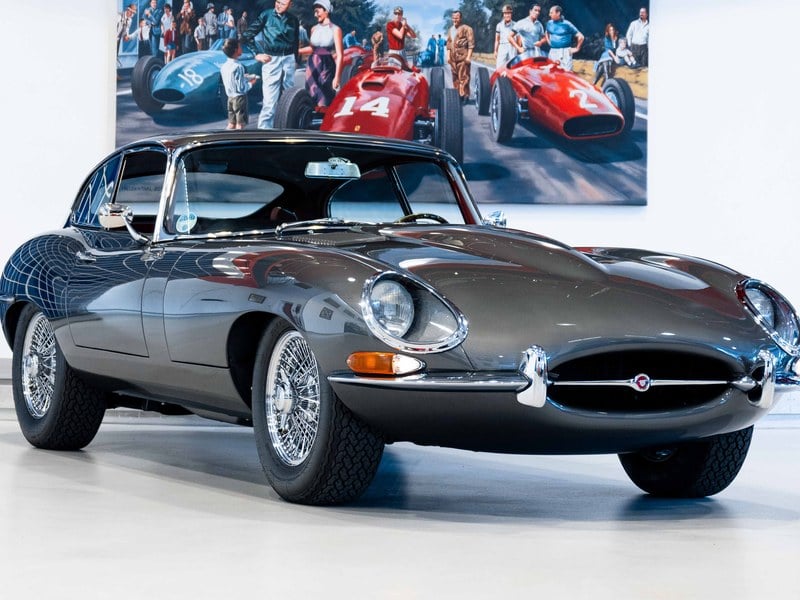
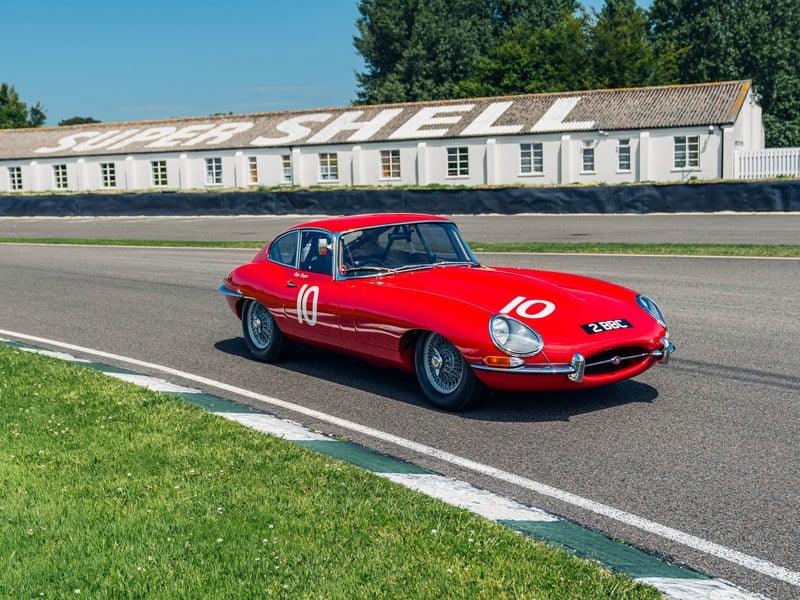
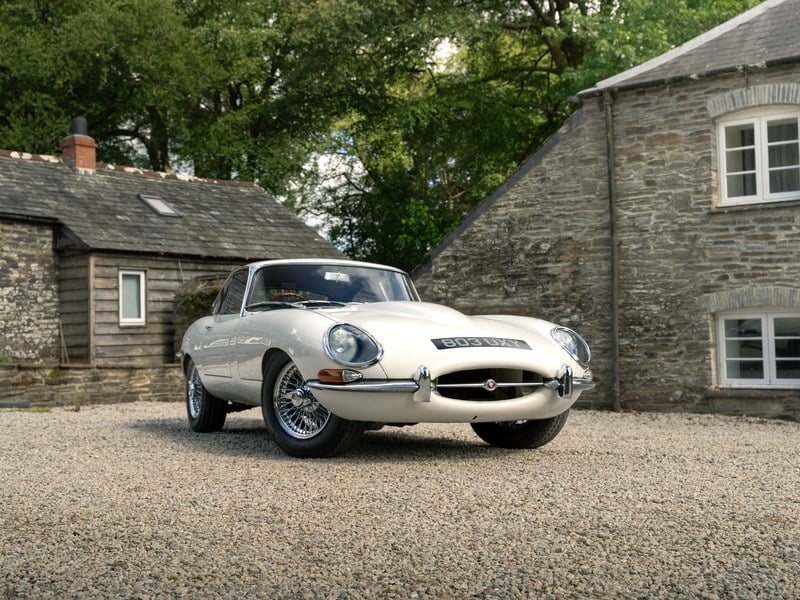
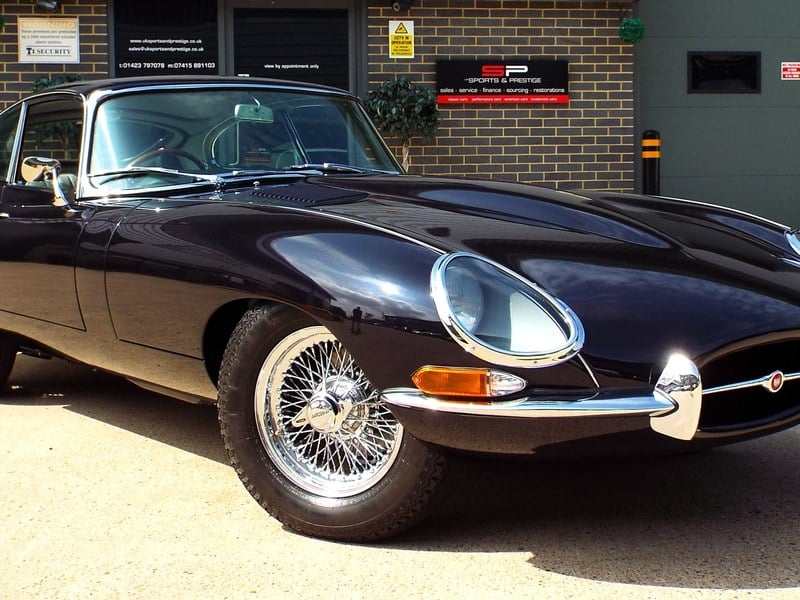
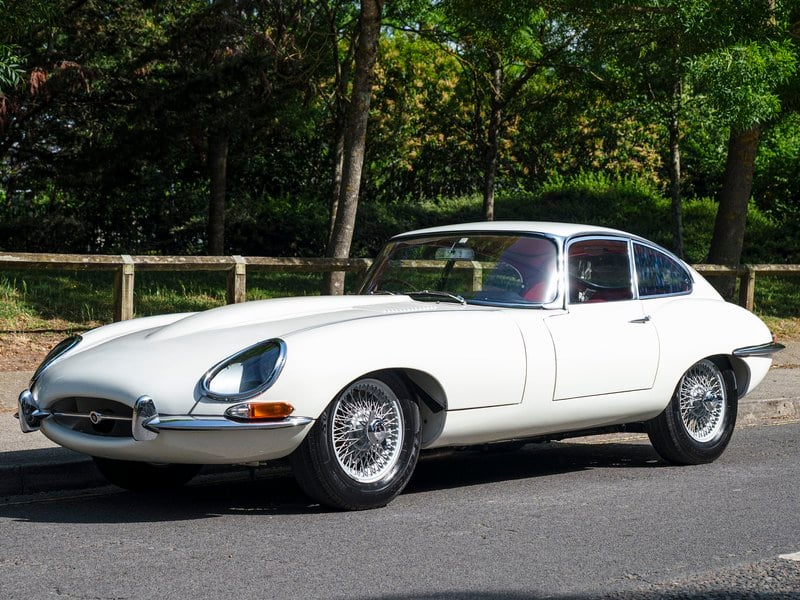
Kelham Hall | Newark, Nottinghamshire Viewing: Tues 22nd September 2026 from 12pm Auction: Weds 23rd September 2026 12pm Location: Kelham Hall Main Street, Newark, Nottinghamshire NG23 5QX Registration No: FTJ 43C Chassis No: 1E20300 MOT: August 2027 Highly desirable home-market car; supplied new viâ Portsmouth Jaguar agents Munn & Underwood Acquired by the vendor in 2014 from Century Classics for £100, 000 Thereafter supplied with a full engine renovation to the sum of around £8, 300 in 2015 1 of just 1, 583 right-hand drive 4. 2 Fixed Head Coupés One of the great motoring icons of the last century, Jaguar’s E-Type is a car that has always inspired loyalty and devotion. Born out of the fabulous D-type racer, the newcomer soon acquired a competition heritage of its own (as witnessed by Briggs Cunningham and Roy Salvadori’s strong drive to fourth overall in the 1962 Le Mans 24 Hours). Faster and more glamorous than virtually all its production rivals, it put many so-called ‘sports cars’ to shame at its 1961 Geneva Motor Show launch. Certainly, few could come close to its reputed 150mph top speed or the savage acceleration that allowed it to touch 60mph in less than seven seconds. In an age when a decent family saloon could call upon its engine for 65bhp, the E-Type’s 3, 781cc, DOHC, straight six claimed an additional 200bhp with the later, 4. 2-litre variant boasting more torque. Updated during August, 1964, the E-Type gained a larger 4, 235cc XK DOHC straight-six engine and more user-friendly manual gearbox with synchromesh on each of its four forward speeds. Thankfully, the Big Cat’s beautiful styling remained unaltered until the introduction of the so-called Series 1. 5 cars during September, 1967, by which time just 1, 583 RHD E-Type 4. 2-litre Fixed Head Coupés had been made. One only has to use a little bit of imagination to get a sense of what an otherworldly machine this E-type must have appeared to be in the early 1960s, with its aerodynamic side profile and shimmering opalescent paint. This particular car, with the appealing chassis number 1E 20100, is an original 4. 2-litre, right-hand drive, manual transmission Coupé, and was manufactured on December 4th, 1964. Intriguingly, however, the original chassis plate was incorrectly stamped by the factory with the number 20300. Anders Clausager, the late archivist for Jaguar Heritage, confirmed that 20100 was the correct number, but also that the mis-stamped plate was the genuine factory article. As collectors of everything from rare books to Dinky Toys will be aware, misprints, irregularities and factory errors are often highly sought-after! Passing through the distributor Henlys Ltd., the Jaguar was despatched on December 14th and reached the Portsmouth dealership of Munn & Underwood on 29th. There, it was registered with the Portsmouth number ‘CBK 602C’, but it had fallen out of use by the early ’80s, and it was removed from the DVLA database after it was computerised, the Jaguar’s records not having been updated by the 1983 deadline. In November, 1989, it was reregistered by Mr. Roy Sherman, but, having lost its original number, it became ‘FTJ 43C’. Mr. Sherman sold the car a few weeks later in December, and its subsequent history is reasonably well-documented. The new owner was Mr. David Hardy, who undertook a full restoration, then sold the Jaguar in February, 1991, to Mr. Brian Anderson. A consummate enthusiast, Mr. Anderson spent £10, 000 refurbishing the gearbox, clutch, steering rack, brakes and exhaust (remade from stainless steel) in 1992, and would remain the car’s meticulous owner until 2009. Two further owners followed prior to our vendor taking ownership in 2014. Our vendor purchased the car for £100, 000 from Century Classics. Unfortunately, within a year, it was discovered that the engine block had sustained some quite serious damage, so the Jaguar was returned to the Century workshops in 2015 to undergo a major overhaul, which cost in the region of £8, 300. This involved the fitment of a replacement engine block, which was built up to the highest standard. It was bored out, fitted with stepped-ridge cylinder liners and standard-size Mahle pistons, and assembled with a reground crank, an overhauled cylinder head, and all-new bearings, timing chains, cam sprockets, oil pump, head studs, seals and gaskets. The clutch and slave cylinder were replaced, the metal vacuum pipes to the servo were renewed, the gearbox selection was checked and deemed satisfactory, some paintwork repairs were effected on the frame and bulkhead, and a ventilated front brake upgrade kit was added. With that being done, the E-type was returned to our vendor in a condition which looks almost showroom-fresh, although with the brake upgrade, the specification is now arguably better than new. The other aspects of the 1990 restoration have held up extremely well, and altogether the car is in exemplary condition. This is no doubt attributable to it having had only the most...