Beskrivning
Ytterligare information på vår webbplats:
- details above
Chassi P/ 1033
En av de tre GT40 som beställdes av Scuderia Filipinetti 1965
Bilen var utställd på Filipinetti-montern på Genève bilsalong 1967
Omslaget på februari 1967-nummer av den brittiska tidskriften Car
Deltog i Le Mans 1969
3:e plats i kategori vid 1000 km av Monza 1969
Två andraplatser vid Rallye de l’Ouest och Coupes de Vitesse i Montagny Montlhery 1970
Ford GT40 P/ 1033 skickades till Genève, Schweiz, från Ford Advanced Vehicles Ltd:s fabrik i Slough, Buckinghamshire, England, den 14 januari 1966. Bilen levererades omålad och ofullständig, eftersom den skulle till karossföretaget Graber, där den skulle färdigställas och förberedas som en specialvägbil för Georges Filipinetti, ägare till den berömda schweiziska stallet Scuderia Filipinetti.
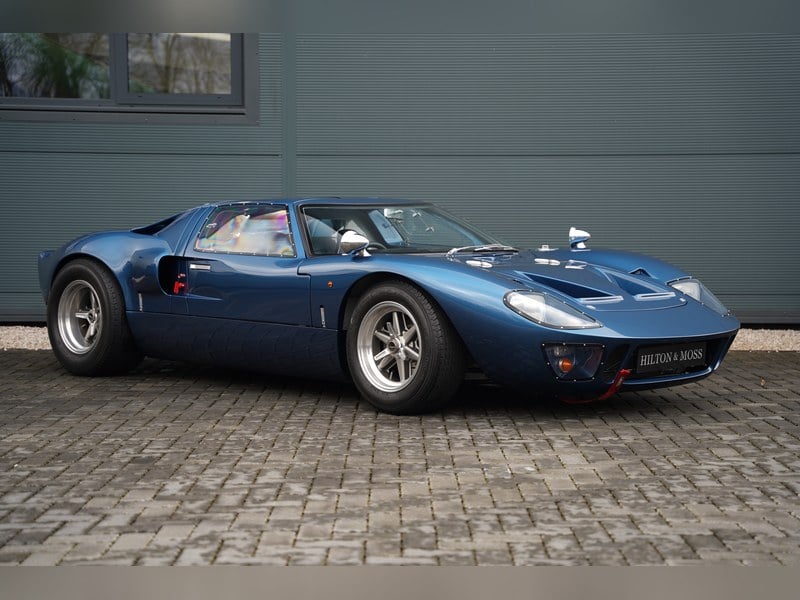
Som FAV uppgav i registreringsbladet för standardbilarna under den tiden var '1033' avsedd som en gatbil. Den levererades med standard tävlingsmotor och växellåda, som senare skulle bytas ut. Grabers arbete färdigställdes i början av 1967: bilen var lackerad i ljus metallblå färg med minimala främre skydd i stil med över-rider, elektriska fönster, helt klädd i läder och det mest lämpliga tillvalet för en GT40: klimatanläggning.
Bilen prydde omslaget på februari 1967-numret av den brittiska tidskriften Car och ställdes ut på Genève-salongen månaden därpå. Herrn Filipinetti sålde den sedan genom Ferrari-återförsäljaren i Genève, Jean-Jacques Weber, varpå han fann en intresserad köpare i den bolivianske mångmiljonären Jaime Ortiz-Patino som då bodde i Genève. Den 5 maj 1967 registrerades ’1033’ i Schweiz med registreringsskylt GE 136999.
I ett senare brevväxling har herr Ortiz-Patino bekräftat att han körde bilen ganska ofta i Schweiz och Frankrike innan han tog bort alla specialutrustningar och gjorde om den till en ren tävlingsbil så att hans gudson Dominique Martin kunde använda den i tävlingar.
Den unga och ambitiöse franska föraren fick först erfarenhet med GT40 genom att delta i en serie mindre nationella backtävlingar, som Col de la Faucille och Beaujolais 1968. Därefter tog han tävlingslicens för att köra bilen i Montlhéry utanför Paris. I början av säsongen 1969 registrerade Dominique Martin ’1033’ för en serie viktiga internationella långdistanstävlingar, inklusive 24 Heures du Mans. Tillsammans med den mer erfarne franske föraren Jean-Pierre Hanrioud i GT40: Martin deltog i Le Mans-provhelgen den 29–30 mars 1969, bilen fortfarande ljusblå och med texten 'ZITRO' tydligt synlig på nosen, vilket angav Ortiz-Patino-familjens sponsring.
Den 25 april körde paret Martin/ Hanrioud med ’1033’ i 1000 km i Monza, giltig för FIA:s världsmästerskap för konstruktörer det året, och slutade på 15:e plats totalt. Deras ambitioner i 24 Hours of Le Mans hindrades av motorhaveri under testkörningarna, men den 12 oktober 1969 lyckades Martin och Pierre Maublanc köra bilen framgångsrikt i Montlhéry 1000 km och slutade 9:e totalt samt fjärde i sin klass. Nästa helg deltog ’1033’ i 300 miles of Hockenheim i Tyskland och åter igen 9:e plats.
1969? 1970 Dominique Martin skickade Ford till Buenos Aires, Argentina, för öppningsloppet i nästa års världsmästerskap. I ett tidigare lopp på 200 miles på Autodromo de Buenos Aires den 11 januari drog han sig ut på grund av växellådsproblem. Dock lyckades han den 18 januari placera sig tolfte i kvalet till mästerskapet, Buenos Aires 1000 km. Tillbaka i Frankrike i mars samma år deltog ’1033’ i Rallye de l’Ouest på allmän väg, där Martin blev tvåa totalt med navigatören Chini vid sidan av.
Dominique Martin valde senare att byta sportlig inriktning och ZITRO Ford GT40, som nu var överskott, omlackerades i en blek blå färg utan metallisk ton och såldes via Michel Berney, tidigare mekaniker i Scuderia Filipinetti. Tyvärr den 26 oktober samma år körde han mellan sitt hem och verkstaden när han fick en olycka och bilen fattade eld. Han klarade sig oskadd men kunde bara se på medan lågorna spreds. Lokala brandkåren kom i tid och räddade GT40:s ståltakchassi, som förblev nästintill orört, men nästan allt annat som kunde brinna förmultnade.
Denna exemplar kan anses vara perfekt lämplig för världsklass-evenemang som Goodwood Revival Meeting, för gatu-/ rallytävlingar i Europa som Tour Auto, för amerikanska prestigefyllda evenemang och praktiskt taget för varje historisk tävling i USA.