Description
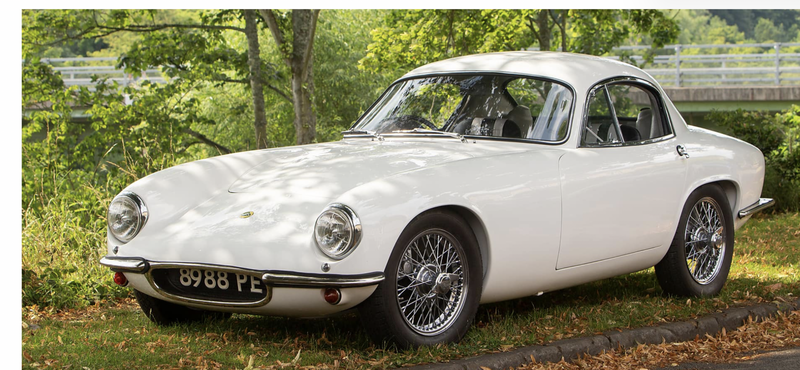
LOTUS ELITE 1960 — EXCEPTIONAL AND EXTREMELY RARE
MAKE: Lotus
MODEL: Elite – Type 14
YEAR: 1960
CHASSIS: 1301
ENGINE: Coventry Climax FWE 8774
DISPLACEMENT: 1, 216 cc
ODOMETER: 329 miles since restoration
OWNERS: 1 since restoration
CERTIFICATION: FIVA
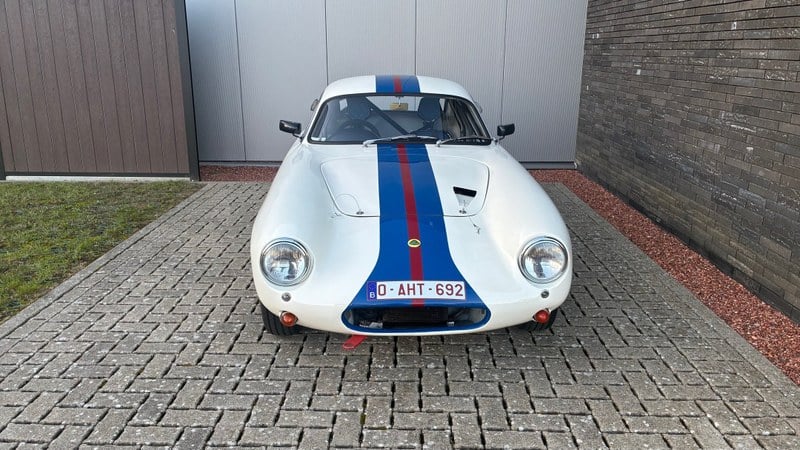
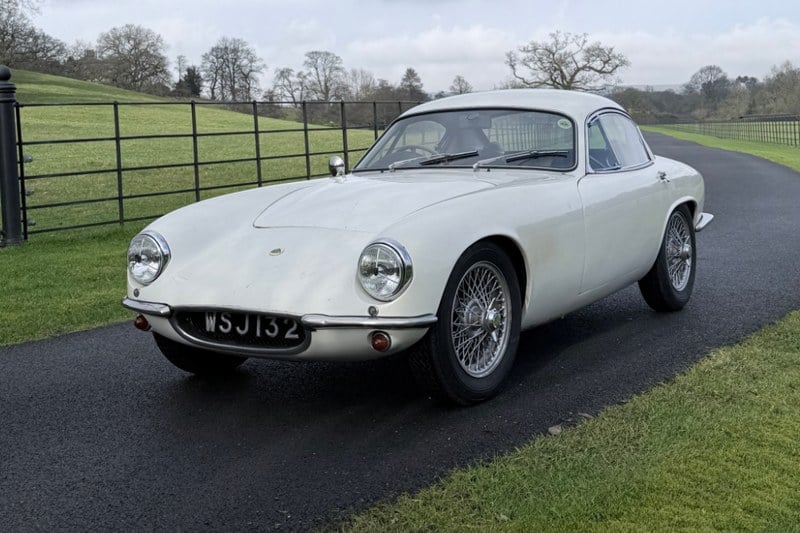
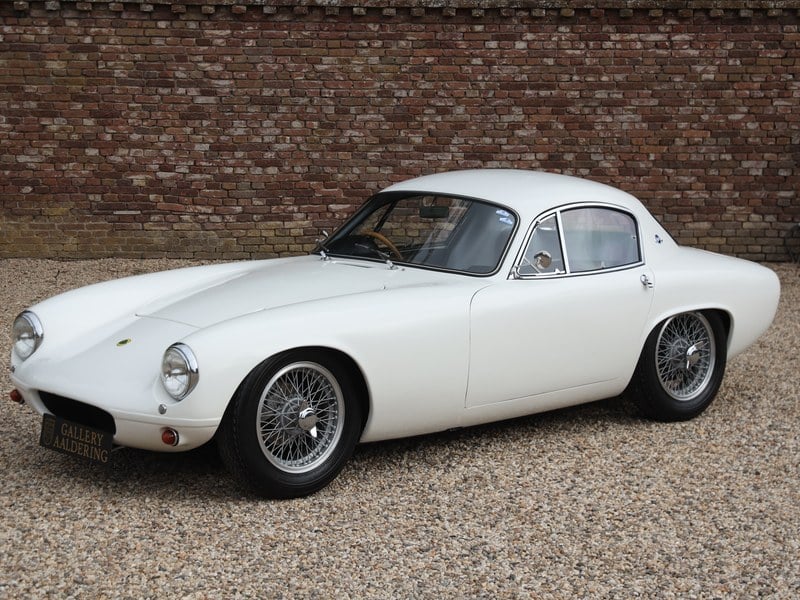
BODYWORK: White
INTERIOR: Black
AN EXCEPTIONAL 1960 LOTUS ELITE
We present a 1960 Lotus Elite, a motor car of extraordinary rarity and absolute historical significance, offered today in exceptional condition following a complete restoration carried out in Italy with the involvement of highly respected specialists, both Italian and British.
This is the celebrated Lotus Type 14 Elite, one of the most innovative and significant models in the history of the marque founded by Colin Chapman. The Elite represented a genuine technical revolution for the second half of the nineteen-fifties: a compact two-seater coupé built around a monocoque chassis constructed from fibreglass, an extremely advanced solution for the era, which integrated the structural function of the bodywork whilst eliminating the traditional separate frame. media. lotuscars. com+1
The result was an exceptionally lightweight, aerodynamic and sophisticated motor car, capable of delivering sports-level performance and handling with a surprisingly modest engine capacity.
HISTORY, INNOVATION AND RARITY
Unveiled to the public at the London Motor Show in 1957, the Lotus Elite was born from Colin Chapman's design philosophy, based on the principle of lightness as a fundamental element for achieving high performance.
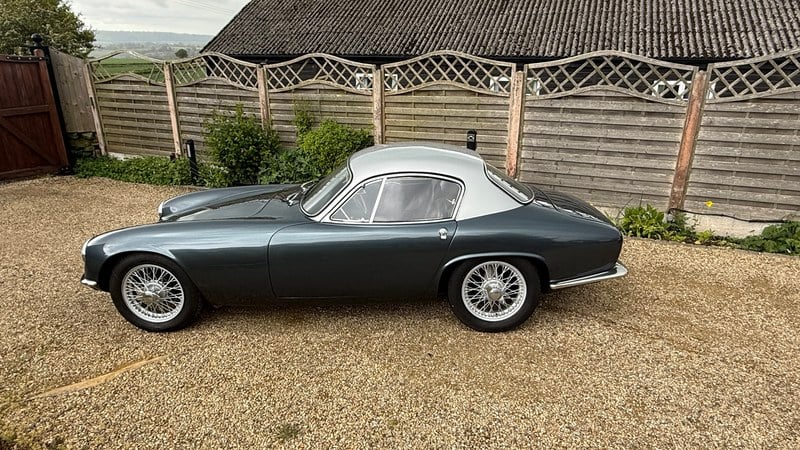
The bodywork, styled by Peter Kirwan-Taylor, was distinguished by an exceptionally low, flowing and elegant line, characterised by a claimed aerodynamic coefficient of approximately Cd 0. 29. Hagerty
The monocoque fibreglass structure represented one of the motor car's most revolutionary features: it was not simply a matter of external fibreglass panels, but rather a genuine load-bearing structure. The front section incorporated metallic elements designed to support the engine and front suspension. live. historics. co. uk
The engine chosen by Lotus was the celebrated Coventry Climax FWE, a four-cylinder in-line unit, 1, 216 cc, with single overhead camshaft distribution and lightweight alloy construction. Developed from the FWA/ FWB family, the FWE engine was conceived specifically for the Elite and produced approximately 75 bhp, a power output which, combined with the motor car's lightweight construction, delivered remarkable performance for the era. Hagerty+1
The transmission was a four-speed manual with rear-wheel drive; the technical specification included independent double-wishbone front suspension and rear suspension with the characteristic Chapman strut system, together with rack-and-pinion steering and four-wheel disc brakes. Motorsport Australia+1
These characteristics explain why the Elite, despite being conceived as a road car, rapidly became a competition protagonist. At Le Mans, its exceptional efficiency allowed the diminutive Lotus to achieve extraordinary results against motor cars of significantly greater displacement and cost: in 1959 an Elite secured class victory and finished eighth overall. media. lotuscars. com
Production of the first generation ended in 1963. Historical sources indicate approximately 1, 030 motor cars produced in total, whilst Series I examples numbered around 281; Series II production brought the total to just over one thousand examples. Lotus Ltd+1
In this context, a 1960 Elite represents even today an extremely rare motor car, particularly when accompanied by a high-level restoration, FIVA certification and a documented history such as that of this example.
THE RESTORATION — AN INTERNATIONALLY ACCLAIMED UNDERTAKING
Imported from the United States, the motor car has been completely restored in Italy.
The fibreglass bodywork has been entirely restored by KVP, a renowned specialist in the field, with particular attention to the correct reconstruction and finishing of the complex fibreglass chassis, a fundamental and defining element of the Elite.
The interior, now elegantly finished in black, has been appointed by the renowned Ferraresi trimming house, respecting the materials, finishes and artisanal configuration consistent with the historic motor car.
Particular note must also be made of the Coventry Climax FWE 8774 engine, which was sent directly to England to be entrusted to Tony Mantle, a specialist in Coventry Climax engine reconstruction at the Climax Engine Service.
The decision to entrust the mechanical heart of the motor car to a British specialist dedicated to Coventry Climax engines underscores the level of accuracy pursued in the restoration and the commitment to respecting the motor car's original technical identity.
FIVA CERTIFICATION
The motor car is equipped with FIVA Certification, an element of particular importance for an automobile of this collecting significance.
FIVA – Fédération Internationale des Véhicules Anciens identifies as a historic vehicle any motor car of at least 30 years of age, preserved and maintained in historically correct condition and not used as a daily means of transport. The FIVA Card is issued following inspection of the motor car according to the relevant technical code and records information concerning identification, state of preservation, history and known modifications. fiva. org+1
For a Lotus Elite, a model already extremely rare in terms of production numbers, the presence of FIVA certification therefore constitutes an important element of historical and collecting qualification.
ITALIAN REGISTRATION AND PARTICIPATION IN THE VERNASCA SILVER FLAG
Following completion of the restoration, in 2021 the motor car was registered for the first time in Italy.
In the same year it participated in the Vernasca Silver Flag, a prestigious international event dedicated to historic motor cars, and took part again in 2022.
The Vernasca Silver Flag is a dynamic recreation of the historic Castell'Arquato–Vernasca hill climb and has established itself as one of the most prestigious events in the international panorama of competition and collection historic motor cars. The 2021 edition, the XXV, was dedicated to the theme "Museums in Motion" and saw the participation of over 170 motor cars. vernascasilverflag. it+1
According to the documentation relating to the motor car, in both participations, in 2021 and 2022, the Lotus Elite was awarded for its rarity and the high quality of its restoration, obtaining two prestigious accolades:
• 2021 – 1st Prize for the most refined technical solution;
• 2022 – 1st Prize in the Grand Touring category.
These are particularly significant accolades, especially considering the high calibre of motor cars typically present at the Vernasca Silver Flag and the attention the event devotes to technical quality, preservation and restoration.
CURRENT CONDITION
Since completion of the full restoration, the motor car has covered only 329 miles.
The motor car therefore presents in as-new condition, with white bodywork, black interior and a level of finish consistent with a high-profile restoration.
The figure of just 329 miles covered since restoration, combined with a single owner since restoration, FIVA certification, participation and accolades obtained at the Vernasca Silver Flag and the particular attention devoted to the reconstruction of the bodywork, interior and Coventry Climax engine, makes this example particularly interesting for the most discerning collector.
A COLLECTION MOTOR CAR OF EXTRAORDINARY SIGNIFICANCE
This Lotus Elite is not simply a rare English sports car of the nineteen-sixties.
It is the expression of one of Colin Chapman's most audacious design philosophies: achieving maximum performance through minimum weight, applying radically innovative technical solutions.
The combination of monocoque fibreglass chassis, 1, 216 cc Coventry Climax FWE engine, rear-wheel drive, four disc brakes, independent suspension and extraordinary aerodynamic efficiency made the Elite one of the most advanced motor cars of its era. Hagerty+1
Today, with a total production of just over one thousand examples, an international history, a complete restoration executed by specialists, FIVA certification, significant accolades at the Vernasca Silver Flag and merely 329 miles covered since restoration, this example constitutes a proposal of absolute significance for a high-level historic motor car collection.