Description
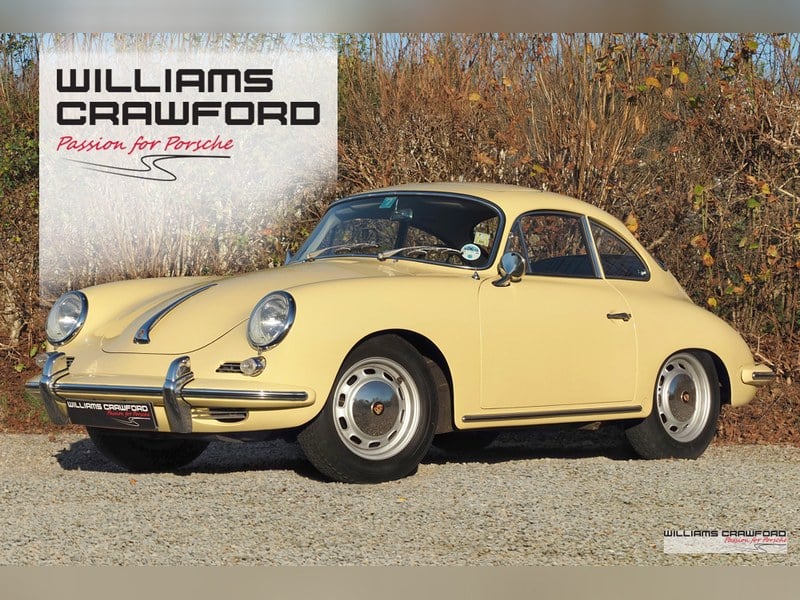
Description and key features of this model: - Version with electric sunroof - Complete 30-year history - Engine rebuilt Our Porsche 356 C Coupé, launched in 1965, has 42, 091 km on the clock. Featuring a rare electric sunroof option (only 300 were produced), this car benefits from a classic and timeless configuration: a Red colour combined with an original Black skai interior. This model was repainted some twenty years ago after a complete stripping of the bodywork, with no trace of corrosion. The bodywork is in excellent condition, with only two minor dents on the front bonnet. Inside, the black leatherette is in immaculate condition, although it still has the original patina. Mechanically, the engine was completely rebuilt 30, 000 km ago. The disc brake system improves safety, and the on-board instrumentation is fully functional. This Porsche is ready to drive any distance, at no extra cost, and has been serviced exclusively by classic car specialists. A full five-owner history and service invoices are available, attesting to the care taken with this car.
Model History: The Porsche 356 C, the latest evolution of the 356 series, was produced between 1964 and 1965. This model marked the end of an era for Porsche, which simultaneously launched the 911, its emblematic successor. The 356 C introduced disc brakes on all four wheels, a significant advance on the drum brakes of previous versions. It also offered as an option the most powerful rocker arm engine in the range, the 1600 SC, delivering 95 bhp. The 356, Porsche's first production car, was built in 1948 in Gmünd, Austria, with an aluminium body. In 1950, production moved to Zuffenhausen, Germany, where the models received steel bodies. Designed by Erwin Komenda, the 356 retained an instantly recognisable silhouette throughout its evolution, from the 'pre-A' to the A, B and finally C versions. With more than 76, 000 examples produced in total, the 356 became a symbol of lightness and handling, appreciated as much for the road as for racing. The 356 C, despite its role as a transitional model, remained highly prized by collectors. Its last examples, built in 1966 for the Dutch police, concluded an automotive adventure that had begun almost two decades earlier.