Description
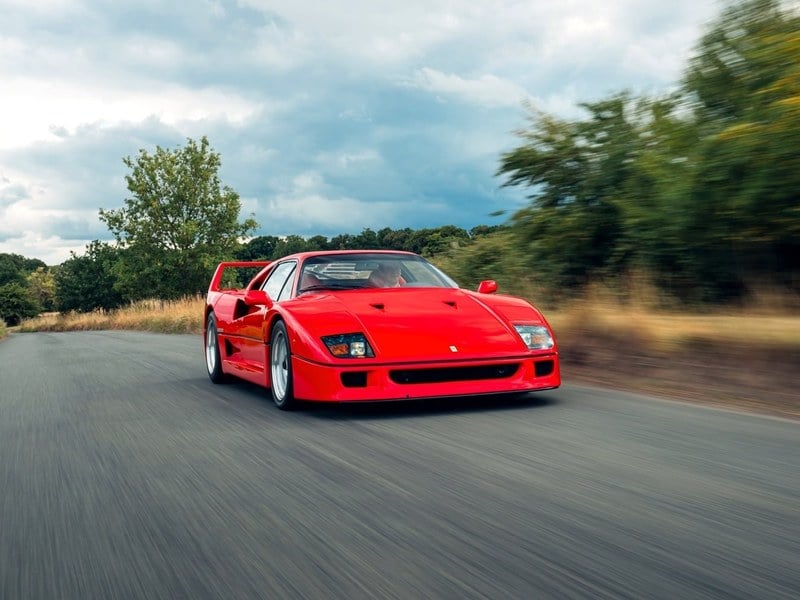
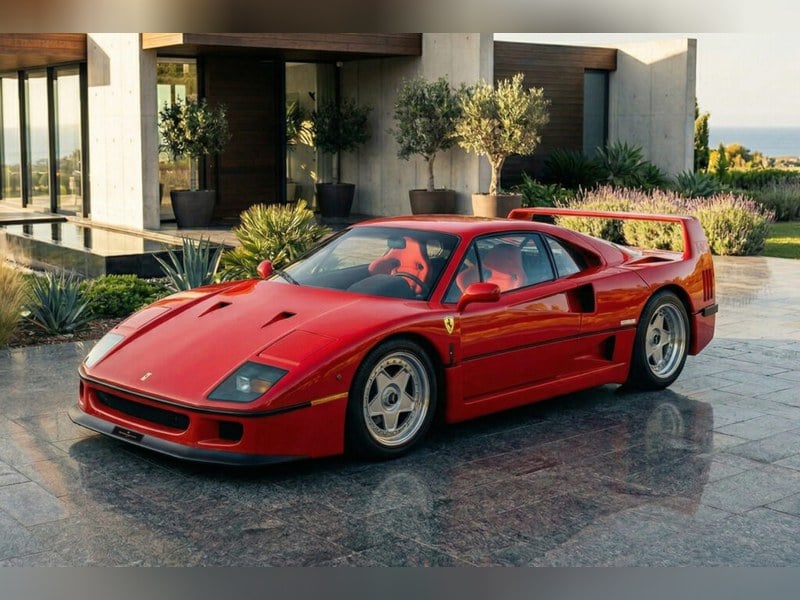
To Be OFFERED AT AUCTION at RM Sothebys' The Woodcote Park Auction event, 8 July 2026. £2, 700, 000 - £3, 200, 000 GBP A highly desirable “non-cat, non-adjust” example Sold new to French motorsport legend Jean Sage via Paris agent Charles Pozzi Modified at Sage’s request by Michelotto in 1994 to CSAI GT-inspired specification; improvements included lightening, power increase, plus suspension and brake upgrades Powered by its matching-numbers engine and gearbox Displayed 22, 699 kilometres (approximately 14, 105 miles) at the time of cataloguing Accompanied by its Schedoni leather folio, original service and warranty book, a Massini report, maintenance invoices, and MoT certificates dating back to 2003 Jean Sage—a figurehead in French motorsport throughout the 1970s, 1980s, and 1990s—made his competitive debut at the age of 20, when he co-drove with André Simon aboard a Ferrari 250 GT in the Mont Blanc Rallye. After racing in Formula 3 during the early 1960s, Sage—alongside Gérard Larrousse and Paul Archambeaud—founded the Écurie Elf team in Switzerland in 1973. The outfit focused on the European F2 Championship, guiding driver Jean-Pierre Jabouille to the title three years later. When Larrousse was hired by Renault at the end of 1976, he brought Sage with him to run the manufacturer’s newly created F1 team in the flame-spitting turbo era that notably gave rise to the topflight career of eventual three-time F1 Drivers’ World Champion Alain Prost. Leaving Renault in 1987, Sage went on to join Ferrari France (operating as Charles Pozzi SA) in 1989. He would run the F40 IMSA programme in the United States for the subsequent two seasons. This period coincided with the 40th anniversary of Ferrari, for which company founder Enzo had sought to create a car that represented his firm’s racing legacy. Thus, the F40 was born. Giuliano Michelotto had helped fellow engineer Nicola Materazzi construct the 288 GTO Evoluzione, and both parties became deeply involved in the F40 project. When the road car was announced to the public, Charles Pozzi commissioned Michelotto to develop a competition version—the F40 LM—for the 24 Hours of Le Mans. Eventually, Ferrari sanctioned the project and Michelotto went on to prepare and modify a total of 18 F40s to LM specification. The two Ferrari France IMSA cars were piloted by Jabouille, Jean Alesi, and Jean-Louis Schlesser. Of the five races entered, they took home five podium finishes. Sage, understandably enamoured from running the IMSA programme, acquired a 1989 model-year F40 via his employer Charles Pozzi. Supplied as a highly desirable “non-cat, non-adjust” example, chassis number 84642 was issued with its factory warranty in April 1990 and registered to Sage’s Annecy address in May. Clearly enjoying his latest Ferrari, by July 1992, Sage had already covered over 9, 000 kilometres, according to the service book on file. In 1994, Sage commissioned Michelotto to modify his car, taking inspiration from the CSAI GT specification, which importantly maintained the F40’s road-legal status. It should be noted that Sage’s time as head of the Ferrari France race team placed him in a unique position to commission such modifications to his F40, utilising both his direct expertise and the suite of developments Michelotto had achieved through its F40 association. A copy of the original upgrade summary is on file, denoting all that was done in evolving chassis 84642. The odometer was noted as reading 16, 203 kilometres at the time of these changes. The power rating sheet importantly differentiates chassis 84642 as the “F40 Jean Sage Michelotto”. Michelotto rebuilt the original engine with two I. H. I. special turbochargers and fitted a lightweight exhaust system crafted by specialist Maurice Chabord. This raised output to 527 horsepower (an increase of 49 horsepower) at 7, 000 rpm, with a peak torque reading of 626 foot-pounds (a staggering jump of 200 foot-pounds over the quoted factory figure). The car was equipped with lightweight front and rear clamshells plus sliding windows to save 30 kilograms. The air-conditioning system was removed and special, F40 LM-type carbon fibre seats were mounted and neatly trimmed in red cloth with an attractive quilted pattern to the centre. New safety fuel tanks and filler necks were installed, along with a plumbed-in fire extinguisher system. The car rode on special OZ Racing 17-inch monoblock wheels, an important size as this allowed for either racing or road tyres to be fitted. These were complemented by aluminium Koni adjustable shock absorbers, an F40 LM braking system (including uprating the pedal box with twin master cylinders), a cockpit-mounted brake bias adjuster, and cooling ducts for the front and rear brakes. A chunkier, United States market-style front splitter was fitted to improve downforce. As per the Michelotto build sheet, this F40 was a car to be used on the track or the road. When it left the workshop, Michelotto had achieved a total weight...