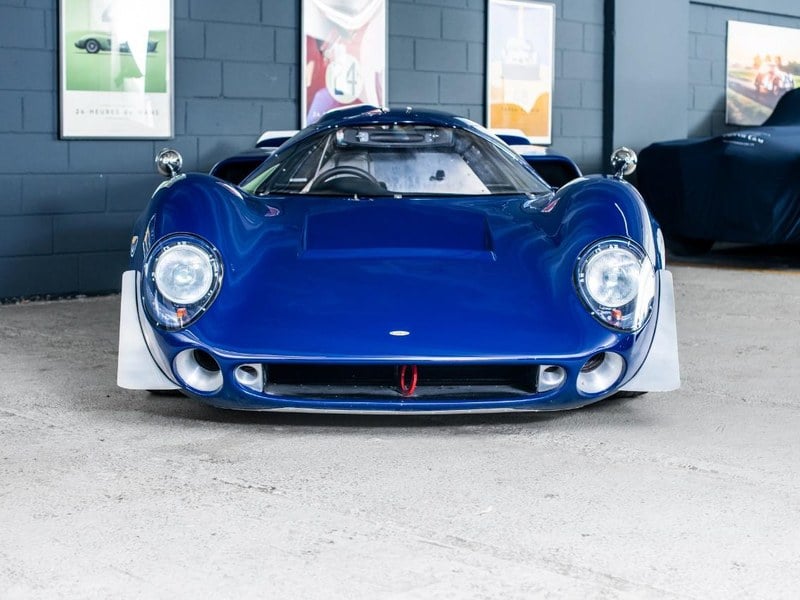
Description
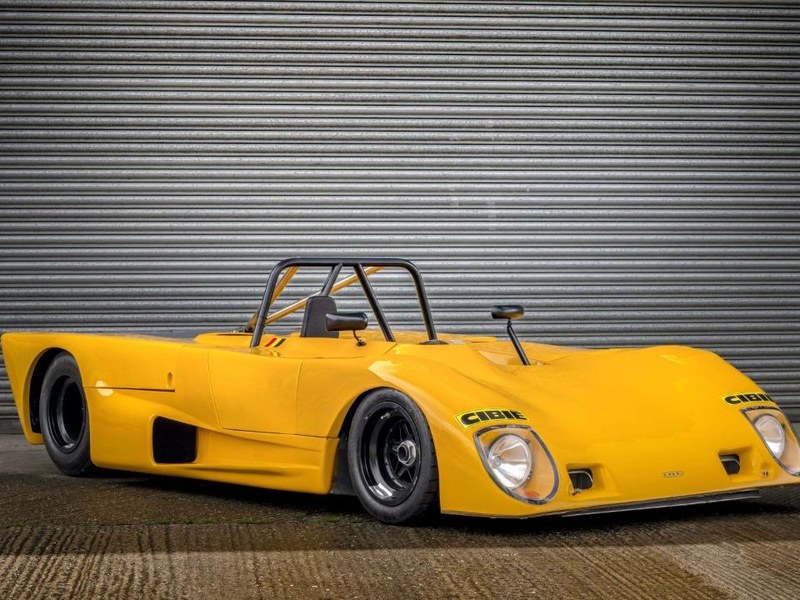
"Strong Coffee" Lola T290 HU17 from 1972 A 2-litre sports car with a winning design, born out of Belgian tradition Fresh FIA HTP certificate valid until 2036 The European 2-litre Sports Car Championship, launched in 1970, reached new heights just three years after it began. All the major chassis manufacturers redoubled their efforts, offering improved versions to stake a claim for the title in this series dedicated to agile Group 5 open-top prototypes. While Chevron, based in Bolton, was putting forward the B21 to replace its successful 1971 chassis, Lola’s rival from Huntington, the B19, introduced the T290 as the successor to the proven T210 and T212 that had already delivered over the previous two seasons. The T290’s design was the result of a collaboration between Bob Marston and two young designers who would go on to reach dizzying heights of world-famous motorsport over the following two decades: Patrick Head and John Barnard. The three men drew inspiration from the T210 design and its evolution, the T212, to create a new aluminium monocoque paired with a double wishbone front suspension, while the rear suspension comprised inverted lower wishbones and upper wishbones with two trailing radius rods. A tubular steel chassis was bolted to the monocoque to allow customers to choose between different engines. The Cosworth FVC, the new Chevrolet Vega developed by Cosworth, and the BDG engines were the preferred choices for most Lola customers. By using a different steel chassis, it was also possible to fit a Cosworth DFV V8, giving rise to the 3-litre T280 model. In the European Championship, the leading drivers behind the wheel of the Lola T290—Guy Edwards, José Maria Juncadella and Jean-Louis Lafosse—took on Arturo Merzario’s Abarth Osella SE021 and John Burton’s Chevron B21, with Lafosse winning the 500 km Nürburgring. In the World Championship for Makes’ Interseries, as well as the British and French sports car championships, the T290 continued to score class wins for Lola. The T290 was particularly made famous by the Bonnier Racing Team, which counted Gérard Larrousse and Jorge de Bagration among its drivers, while Jo Bonnier himself drove a Filipinetti Racing Team example up until his tragic death at Le Mans in 1972. In total, 32 T290s were built, including chassis HU17, which was acquired by the renowned Belgian coachbuilder Marcel van Hool. Van Hool was widely known for its extensive range of buses and coaches, most of which were built in-house or coachbuilt on existing bus chassis from manufacturers such as Volvo and Scania. Marcel’s son, Mikke, made a name for himself by winning in British Formula 3 and later progressed to Formula 3000 in the mid-1990s. Chassis HU17 competed in the European 2-litre Sports Car Championship in 1972 and 1973, with Van Hool fielding Belgian F2/ F3 driver Freddy Grainal. Wearing a combined Fort Koffie/ Café livery (“Strong Coffee”) and Rubery Owen, and equipped with an FVC engine, the car scored a creditable fifth place on its debut at the 500 km Nürburgring. Two early retirements followed at the 400 km at Barcelona (Montjuïc Park) and the 2 Hours of Jarama. In 1973, Grainal entered it on the local Belgian circuit, winning two minor races, before ending the season with another European outing at Montjuïc Park. At the time, HU17 wore different liveries, with photographs of which are included. Later in the decade, the car changed bodywork and was fitted with a Porsche engine to take part in European hillclimb events. In the late 1990s and early 2000s, the car was restored by Richard Tovey from Newbridge Motorsport, with the help of former Lola employees such as Chris Fox and others. This restoration enabled the car to deliver excellent performances at the 2002 (pole position) and 2004 editions of Le Mans Classic. Since then, it has established itself as a formidable contender in historic racing, taking the fight to the 3-litre cars and T70s on more technical circuits with plenty of flair. In recent years, the car has been looked after by Tim Willmer, a former Lola employee, at Lexham Engineering on behalf of its current owner, who had taken pole position at Portimão in 2016 and liked the car so much that he decided to buy it. The car comes with a brand-new FIA HTP certificate and represents an extremely interesting prospect for Peter Auto’s Le Mans Classic CER2 series, Grid 5 for the 2027 Le Mans Classic, the Masters Sports Car Legends, and the “2-Litre…” category.